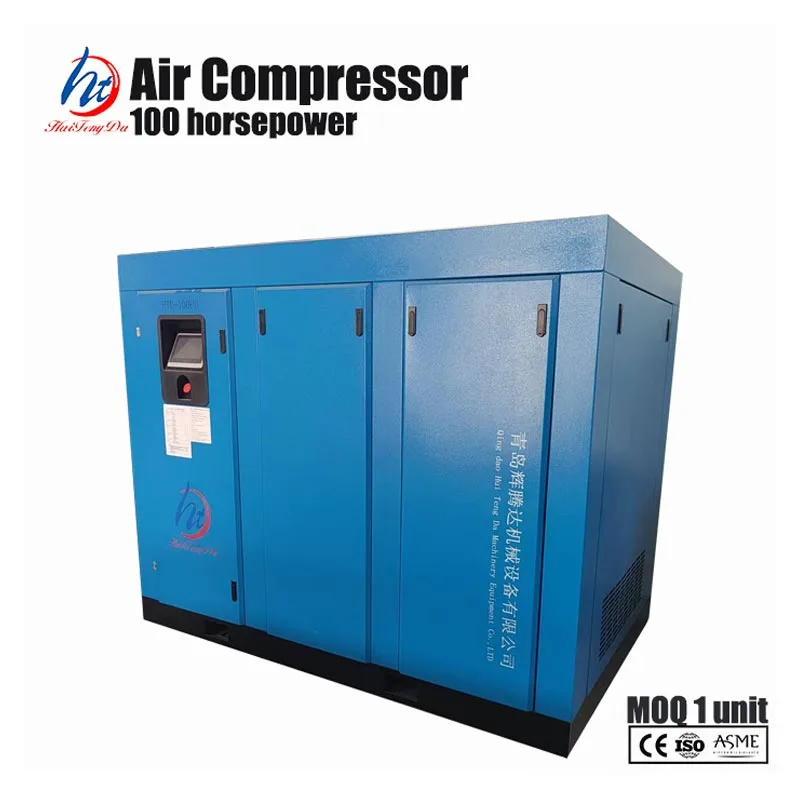
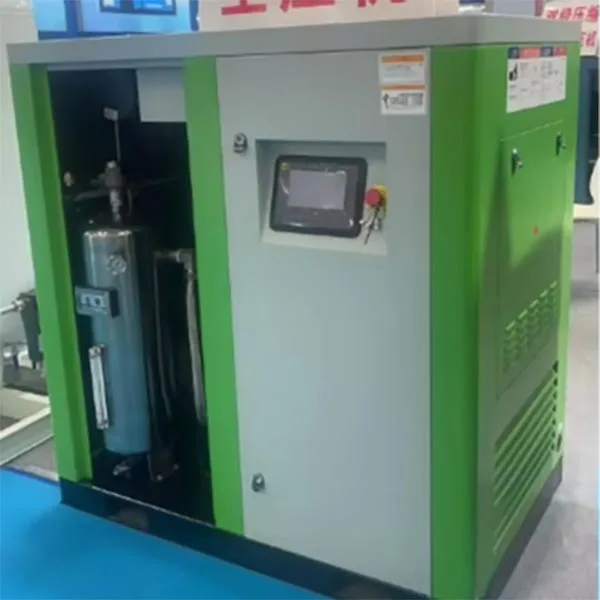
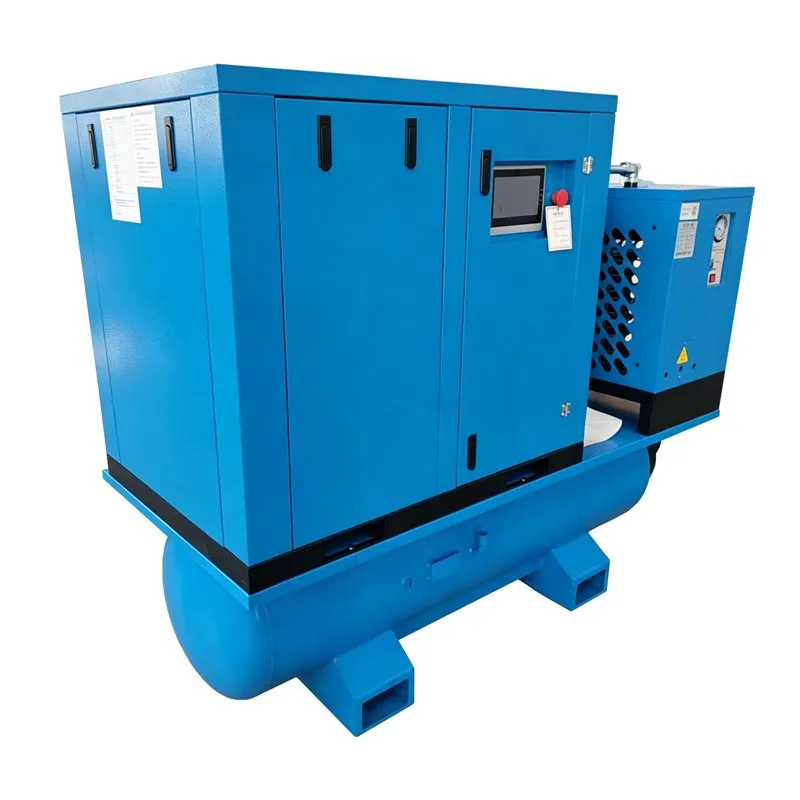
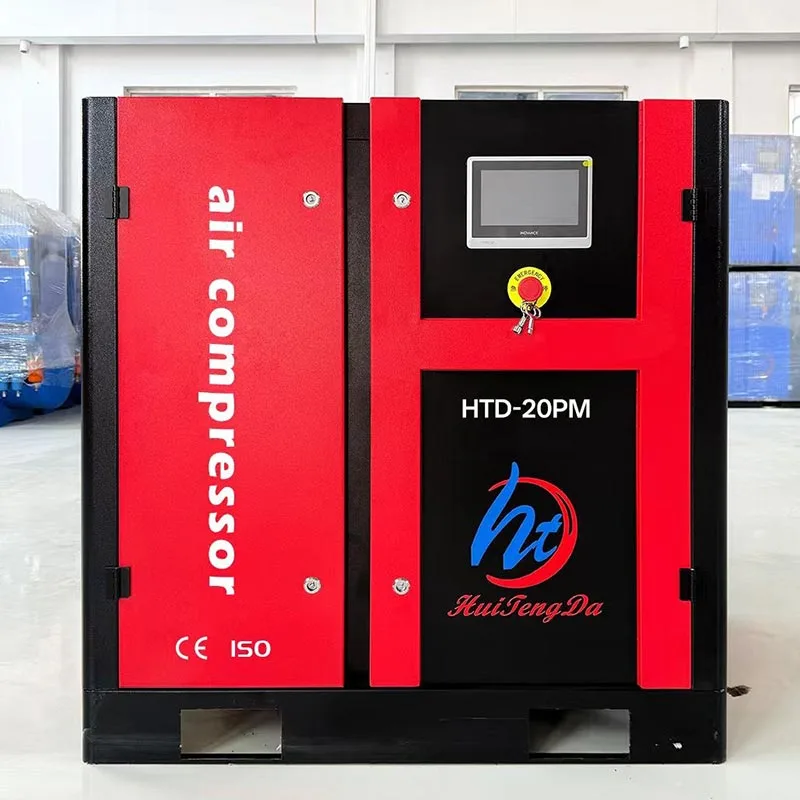
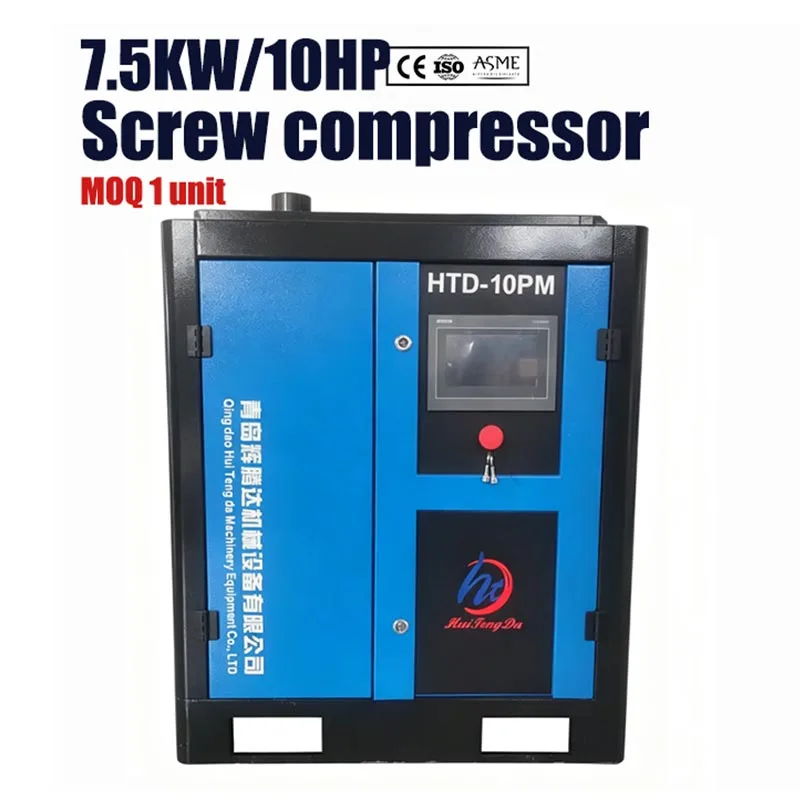
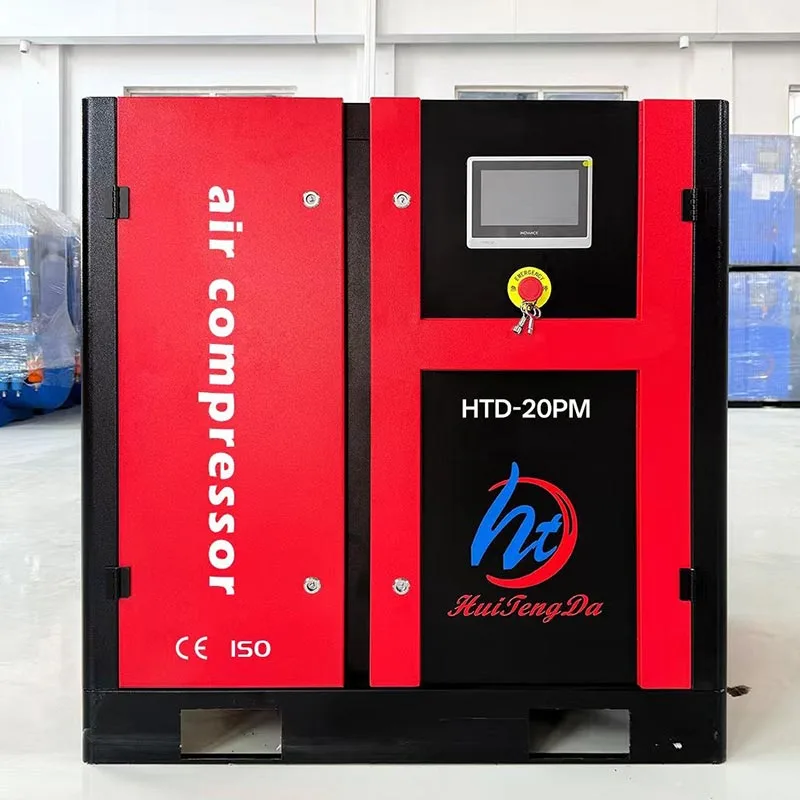
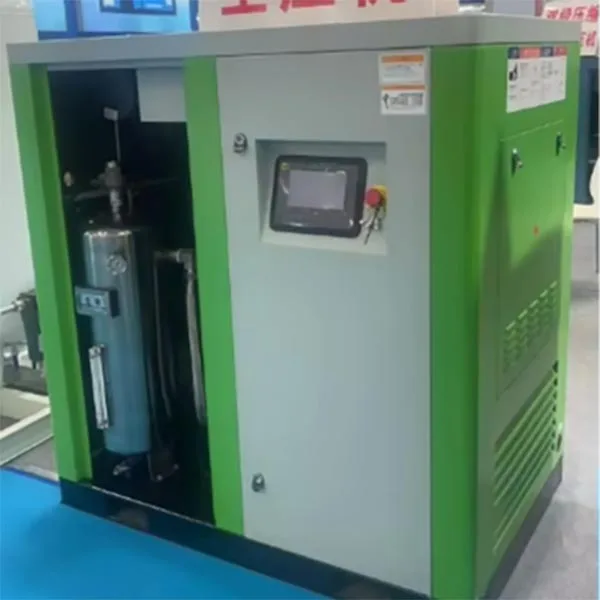
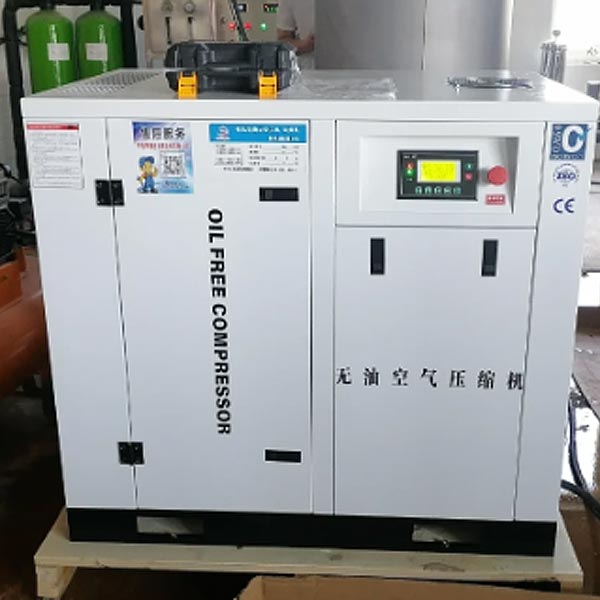
As compressed air systems continue to evolve toward higher air purity, greater energy efficiency, and more reliable operation, oil-free scroll compressors and oil-free screw compressors are establishing distinct positions across different industrial applications.
Although both technologies are designed to provide clean compressed air without oil entering the compression chamber, their internal structures, operating characteristics, capacity ranges, and ideal applications are different. Understanding these differences can help users select a compressed air solution that better matches their actual process requirements.
The core advantage of an oil-free scroll compressor is its oil-free compression process and relatively simple mechanical structure.
A scroll compressor uses two spiral-shaped scrolls: one fixed and one orbiting. Through continuous orbital movement, the scrolls form a series of crescent-shaped compression chambers. Air is gradually compressed as these chambers move toward the center before being discharged.
Because the compression process does not require lubricating oil inside the compression chamber, the technology is well suited to applications where clean compressed air is essential.
· Oil-free compression: No lubricating oil is introduced into the compression chamber.
· Low operating noise: The smooth orbital movement produces relatively low vibration and noise compared with many conventional reciprocating compressors.
· Compact construction: Fewer major moving components allow for a compact footprint.
· Low maintenance requirements: The simplified structure can reduce the number of wear-prone components.
· Suitable for intermittent operation: Particularly practical for applications with relatively small or fluctuating air demand.
These characteristics make oil-free scroll compressors suitable for dental equipment, laboratories, medical facilities, food packaging, electronics manufacturing, and other clean-air applications where low noise, compact installation, and air purity are important.
For smaller compressed air systems, scroll technology can provide a practical balance between cleanliness, operating comfort, and equipment footprint.
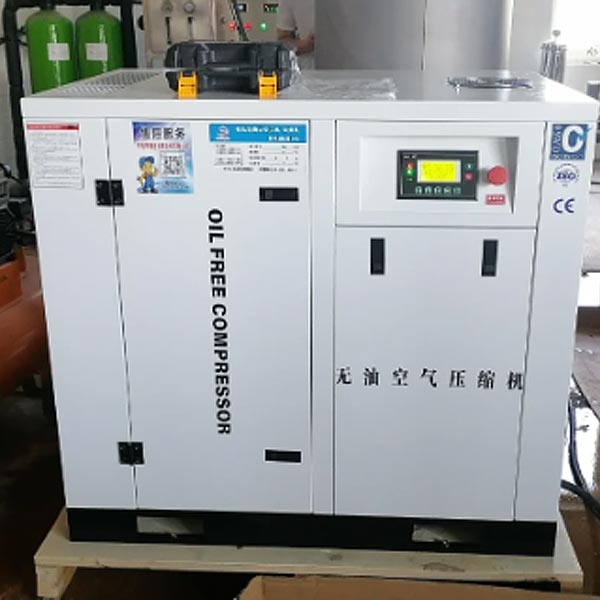
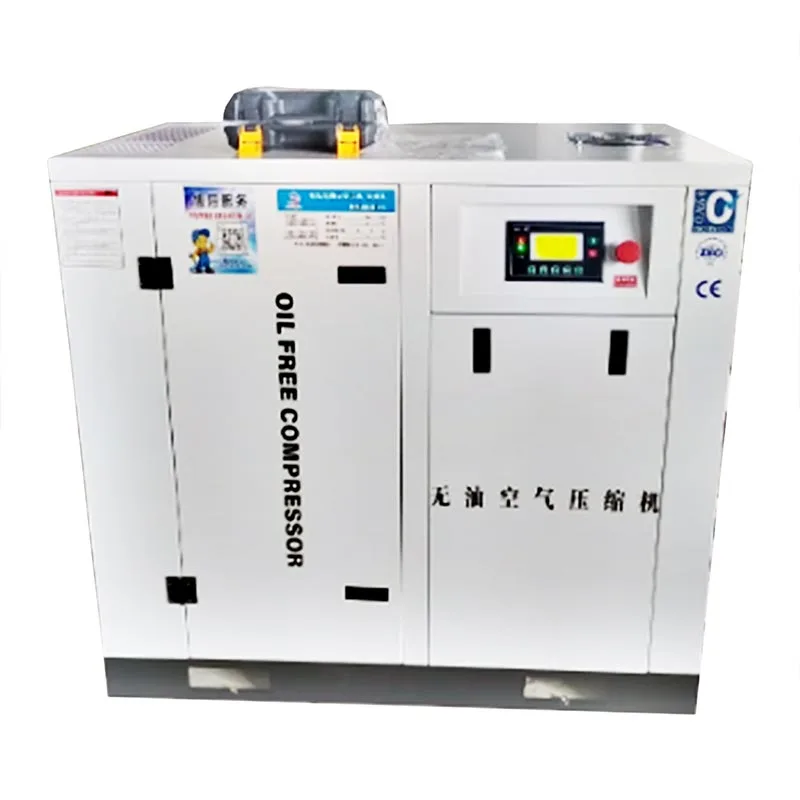
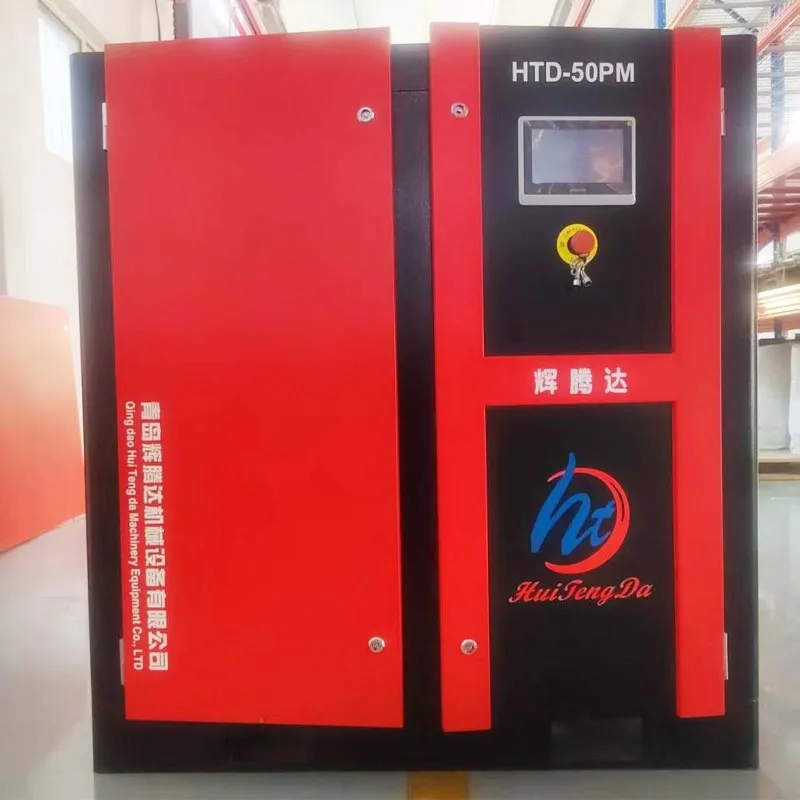
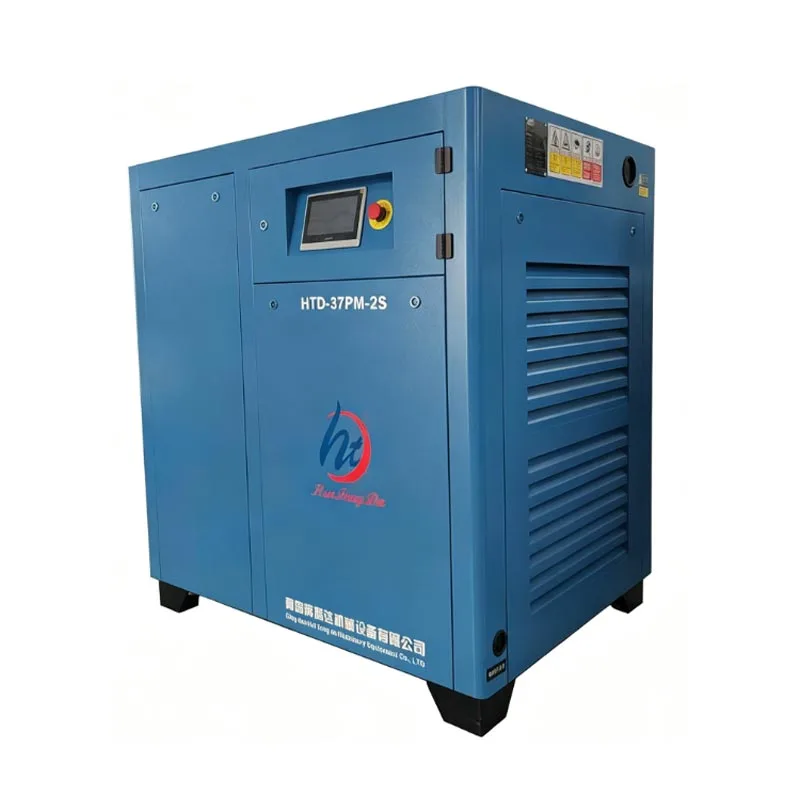
Oil-free screw compressors use a different compression principle.
Inside the compressor housing, a pair of precisely engineered male and female rotors rotate in synchronization. Timing gears maintain the required rotor clearance, allowing the compression process to operate without lubricating oil entering the compression chamber.
Compared with scroll compressors, oil-free screw technology is generally better suited to larger air demands, continuous operation, and industrial processes requiring stable compressed air supply.
Oil-free screw compressors can generally be divided into dry-type and water-injected configurations, each using a different approach to controlling compression temperature and sealing.
Dry-type compressors do not inject liquid into the compression chamber. To manage the heat generated during compression, many systems use multi-stage compression with intercooling.
This configuration is commonly used where continuous high-volume oil-free compressed air is required. The design can provide stable air delivery for demanding industrial processes, although compression temperature management is an important consideration.
Water-injected screw compressors introduce specially treated water into the compression chamber to provide cooling and sealing during compression.
The water helps absorb compression heat and can allow the compression process to operate at a lower temperature than dry-type configurations. Proper water treatment, filtration, and system management are therefore important to maintain reliable operation.
Water-injected technology can be particularly attractive for applications requiring continuous compressed air supply while placing strong emphasis on energy-efficient compression.
The two technologies are not simply competing alternatives. In many cases, they address different operating requirements and capacity ranges.
|
Comparison |
Oil-Free Scroll Compressor |
Oil-Free Screw Compressor |
|
Compression principle |
Fixed and orbiting scrolls |
Male and female rotors |
|
Typical application |
Small to medium air demand |
Medium to large industrial air demand |
|
Operating pattern |
Intermittent or variable demand |
Continuous and high-load operation |
|
Noise |
Generally low |
Depends on configuration and system design |
|
Installation footprint |
Compact |
Generally larger |
|
Air delivery |
Suitable for lower flow requirements |
Suitable for higher flow requirements |
|
Maintenance |
Relatively simple structure |
Requires more system-level maintenance |
|
Typical applications |
Dental, laboratory, medical, food, electronics |
Automotive, pharmaceutical, petrochemical, semiconductor, large factories |
The actual performance of either technology depends on the compressor model, operating pressure, flow rate, control system, installation conditions, and air treatment equipment. Therefore, equipment selection should be based on the complete compressed air system rather than compressor type alone.
The choice between an oil-free scroll compressor and an oil-free screw compressor should start with the actual compressed air requirements of the application.
· Air consumption is relatively small or moderate.
· The system operates intermittently or has variable demand.
· Low operating noise is important.
· Installation space is limited.
· Clean compressed air is required for sensitive equipment.
· The application is located in environments such as dental clinics, laboratories, medical facilities, or small production areas.
· The facility requires a continuous supply of compressed air.
· Air consumption and flow requirements are relatively high.
· The compressor needs to operate under sustained industrial loads.
· Stable compressed air delivery is critical to production continuity.
· The application involves large-scale manufacturing or process equipment.
For large industrial systems, screw compressors can provide the high flow and continuous-duty capability required by production processes. For smaller clean-air systems, scroll compressors can offer a more compact and quieter solution.
-
Huitengda Air Compressor Factory, Ligezhuang, Jiaozhou, Qingdao, Shandong, China
Copyright © 2026 Qingdao Huitengda Machinery Equipment Co., Ltd. All Rights Reserved. Links| Sitemap| RSS| XML| Privacy Policy