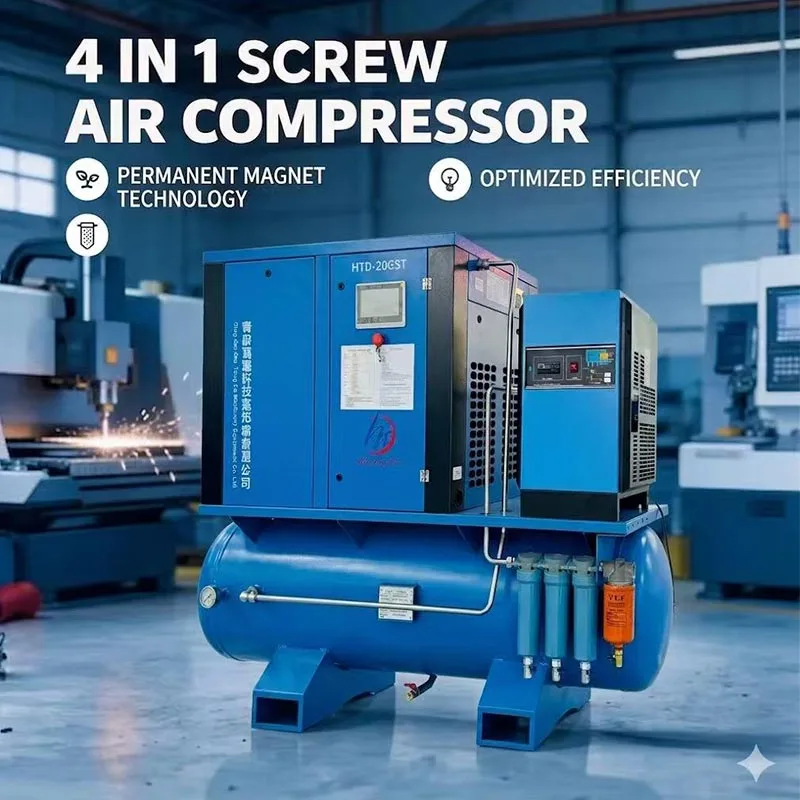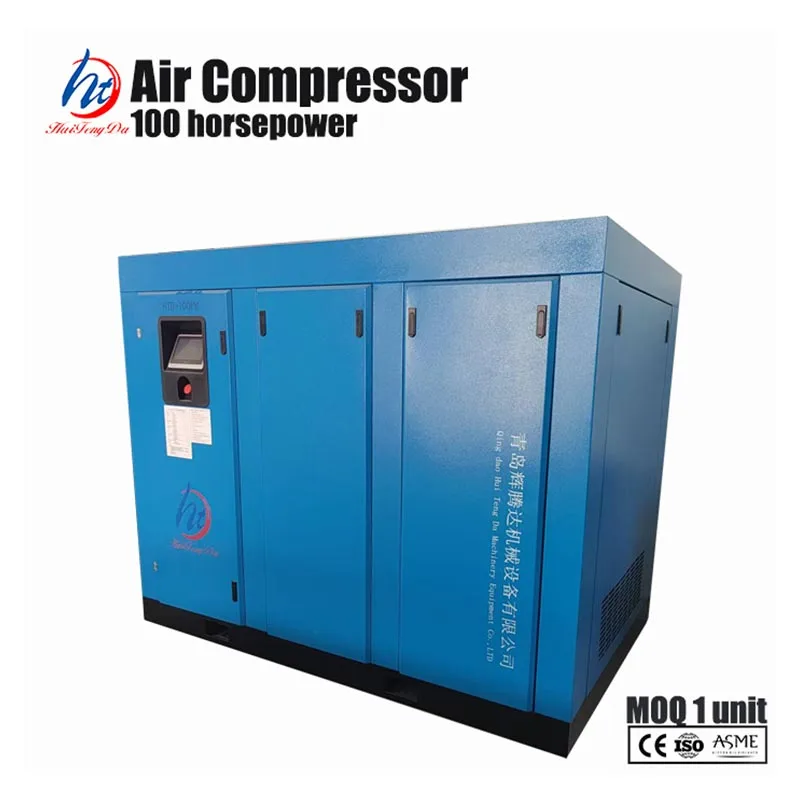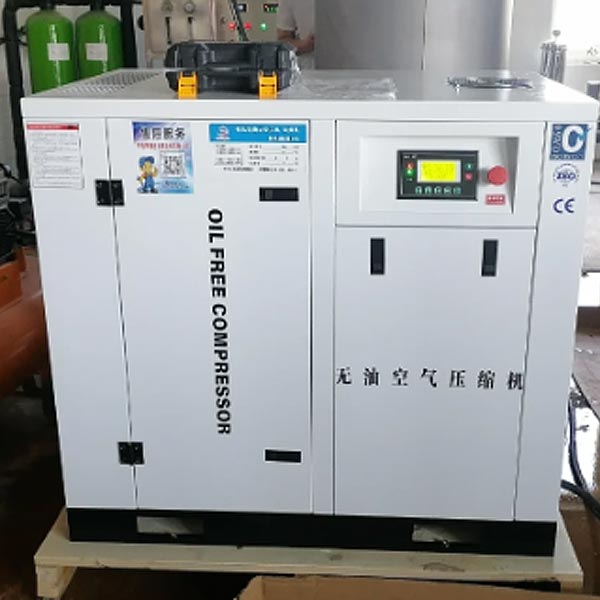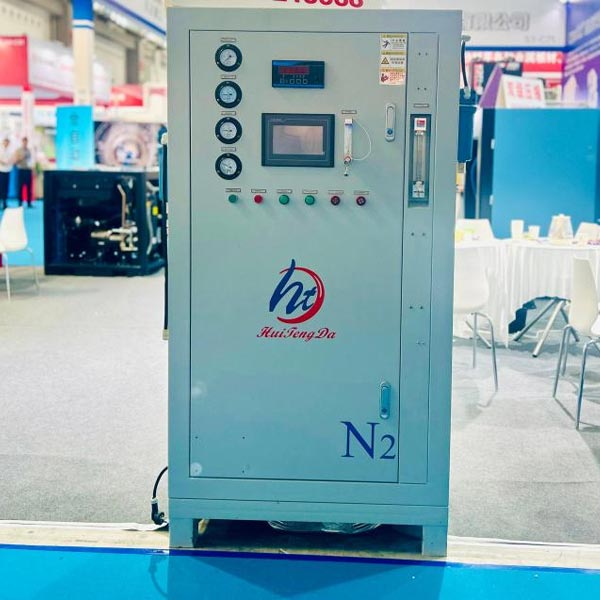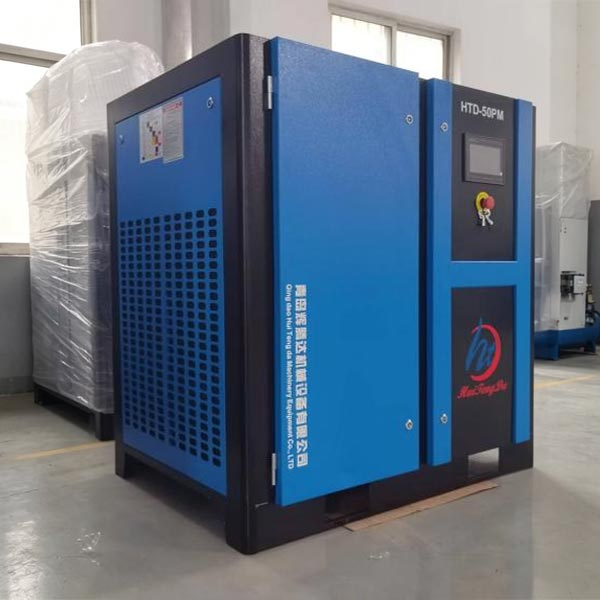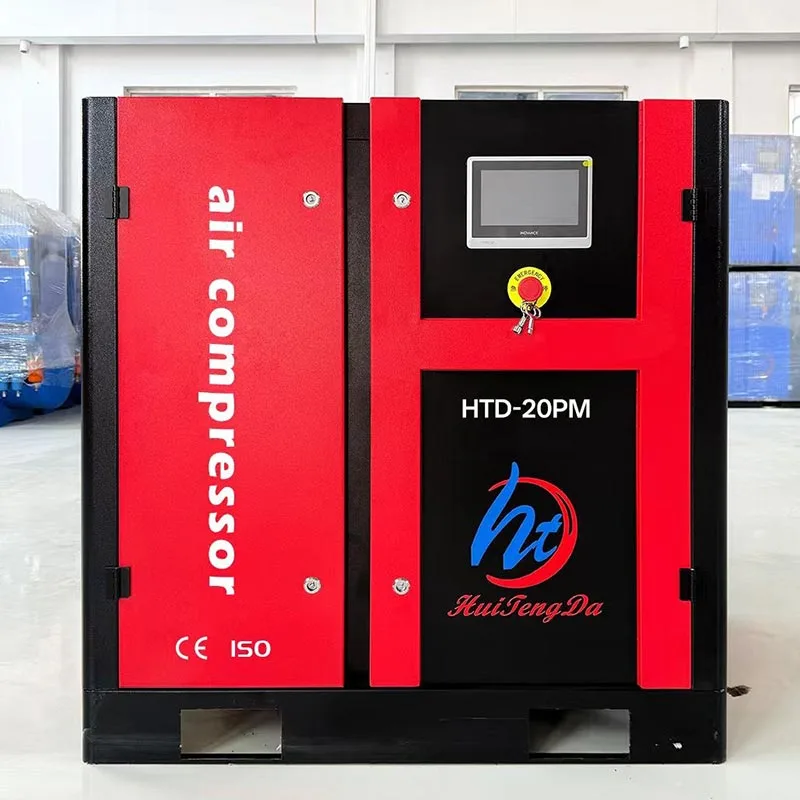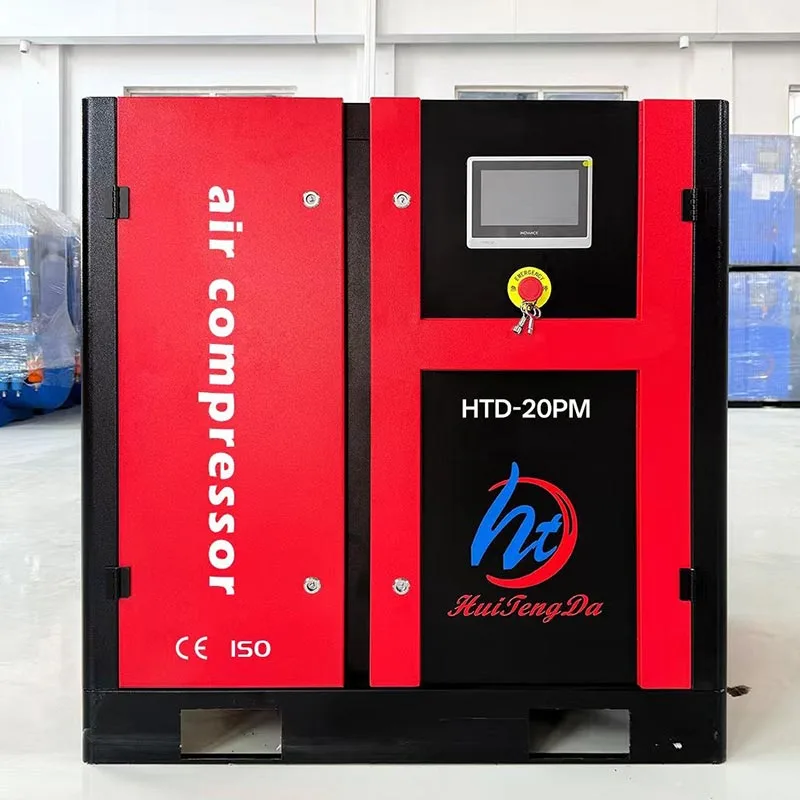

An air compressor for food processing must deliver reliable compressed air while helping manufacturers control oil, moisture, particles, and other potential contaminants. From pneumatic conveying and ingredient handling to filling, packaging, and automated production, the right compressed air system supports food safety, production efficiency, and consistent product quality.
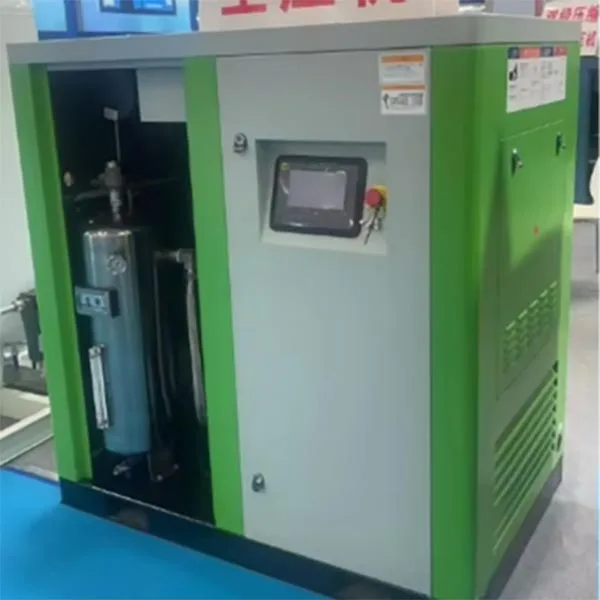
An air compressor for food processing supplies compressed air for food production, conveying, drying, filling, and packaging. This guide explains how to assess contamination risks, compare compressor technologies, determine air quality requirements, calculate system capacity, and maintain consistent performance. It also outlines practical purchasing considerations for food manufacturers seeking reliable, energy-conscious compressed air solutions.
1. What Is an Air Compressor for Food Processing?
An air compressor for food processing is an industrial machine that draws in atmospheric air, compresses it, and delivers it to equipment that requires a controlled supply of pressurized air. Depending on the production line, compressed air may operate pneumatic actuators, move bulk ingredients, remove moisture, control filling equipment, or support packaging operations.
Unlike compressed air used in some general industrial environments, food production air may interact directly or indirectly with edible products and food-contact surfaces. Its quality therefore needs to be evaluated according to the actual process and the potential consequences of contamination.
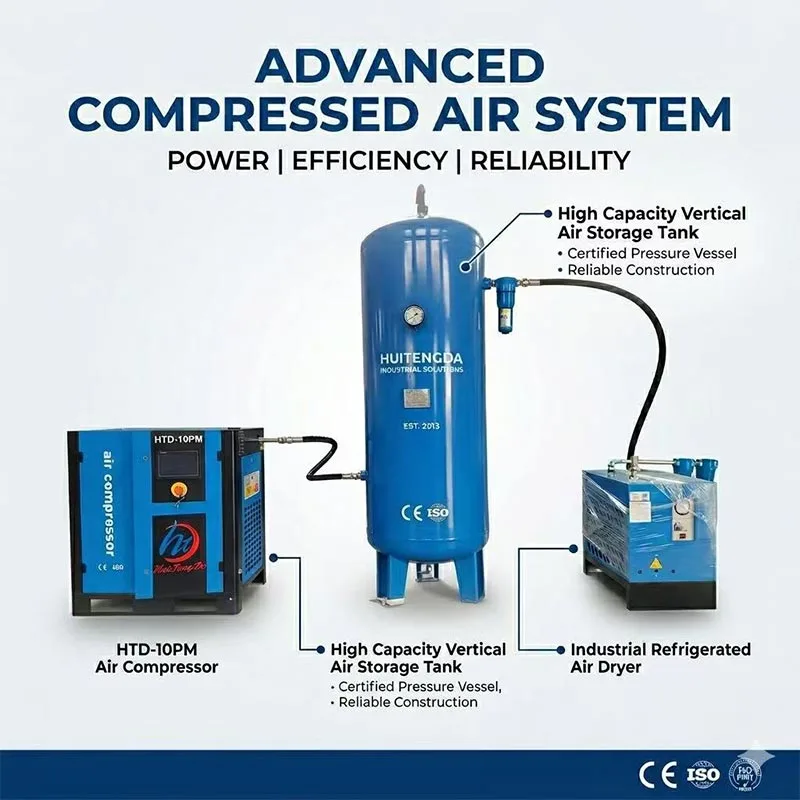
Key Components of a Compressed Air System
- Air compressor: Generates compressed air at the required operating pressure and flow.
- Air receiver: Provides temporary storage, helps manage demand fluctuations, and supports system stability.
- Air dryer: Reduces moisture to the required pressure dew point.
- Air filters: Remove specified particles, oil aerosols, or other contaminants according to system design.
- Distribution piping: Delivers compressed air to production equipment while limiting leakage and contamination risks.
- Monitoring equipment: Measures relevant operating conditions and helps verify air quality.
These components must work together. Installing a high-performance compressor alone does not guarantee that air at the point of use will meet the required purity specification.
2. Why Is Compressed Air Quality Important?
Compressed air can carry contaminants from the intake environment, compressor equipment, storage vessels, and distribution network. Water vapor may condense as air cools, while particles, oil aerosols, and microorganisms may enter or develop within parts of the system if controls are inadequate.
Food Safety Protection
Air that contacts exposed products or food-contact surfaces can introduce unwanted substances. Appropriate compression technology, filtration, drying, and verification help reduce this risk.
Consistent Product Quality
Contaminated air may affect product appearance, taste, odor, or shelf life. Stable air quality helps manufacturers protect product consistency across production batches.
Equipment Reliability
Excess moisture can contribute to corrosion, sticking pneumatic valves, and premature wear. Correct air treatment helps protect sensitive production equipment.
Operational Continuity
Reliable pressure and sufficient flow reduce the risk of interrupted filling, packaging, conveying, and other automated processes.
Common Contamination Risks
| Contaminant | Potential Source | Control Measures |
|---|---|---|
| Liquid water and water vapor | Atmospheric humidity and condensation | Suitable air dryers, condensate drains, and dew point monitoring |
| Oil aerosols and vapor | Lubricated compression systems or contaminated intake air | Appropriate compressor technology, treatment equipment, and oil monitoring |
| Solid particles | Ambient dust, corrosion, and pipe scale | Intake management, particulate filtration, and clean distribution piping |
| Microorganisms | Ambient air, moisture, and downstream contamination | Risk-based filtration, hygienic design, maintenance, and microbiological testing where needed |
Effective contamination control begins with a documented assessment of where compressed air can reach food, packaging, or food-contact equipment. The required controls should reflect the process rather than rely on a single specification for the entire factory.
3. What Are the Common Applications in Food Manufacturing?
Compressed air supports a wide range of production processes, from handling raw ingredients to sealing finished packages. Each application has different pressure, flow, cleanliness, and continuity requirements.
Pneumatic Conveying and Ingredient Handling
Compressed air can help move powdered or granular ingredients, including flour, sugar, starch, and other food materials. The required system depends on the conveying method, material characteristics, transfer distance, and throughput. Because air may contact the ingredients directly, contamination prevention is particularly important.
Filling, Dosing, and Mixing
Automated filling machines, dosing valves, and pneumatic actuators use compressed air to support accurate, repeatable operations. Stable pressure helps equipment respond consistently, while appropriate air treatment reduces the risk of introducing contaminants into exposed products or contact surfaces.
Food and Beverage Packaging
Packaging lines use compressed air for cylinder operation, package handling, product positioning, and selected cleaning or blowing processes. Applications involving direct contact with food or the inner surfaces of primary packaging require special attention to air purity.
Drying and Cleaning Processes
Air knives and blow-off systems can remove surface moisture or loose debris from products and equipment. The air must be suitable for its intended use, especially when it reaches exposed food or sanitized surfaces. Compressed air should not replace validated cleaning and sanitation procedures.
Bottling and Beverage Production
Beverage factories use compressed air to control automated machinery, operate valves, and support selected container-handling processes. Bottle blowing may require a separate pressure range and specialized equipment. Air quality specifications should account for the point of contact and the specific container-forming process.
4. What Types of Air Compressors Suit Food Processing?
Different compressor technologies offer different combinations of air delivery, energy efficiency, maintenance requirements, and initial investment. The right choice depends on production demand, required air quality, operating conditions, and the consequences of downtime.
| Compressor Type | Typical Advantages | Key Considerations |
|---|---|---|
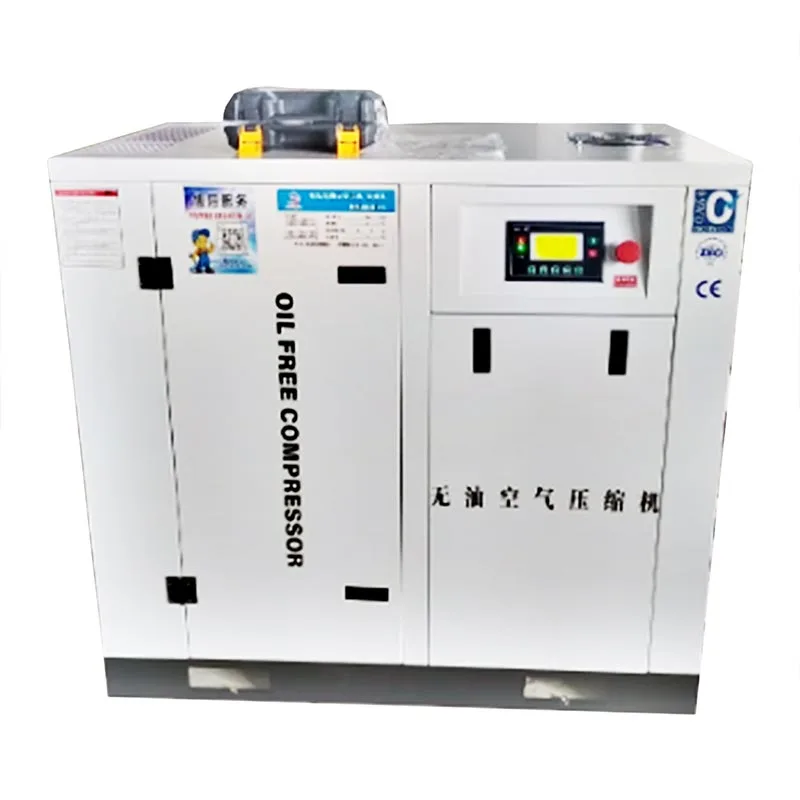
| Oil-free screw compressor | Continuous-duty capability and no oil injected into the compression chamber | Confirm the specified air quality, energy use, maintenance requirements, and downstream treatment needs. |
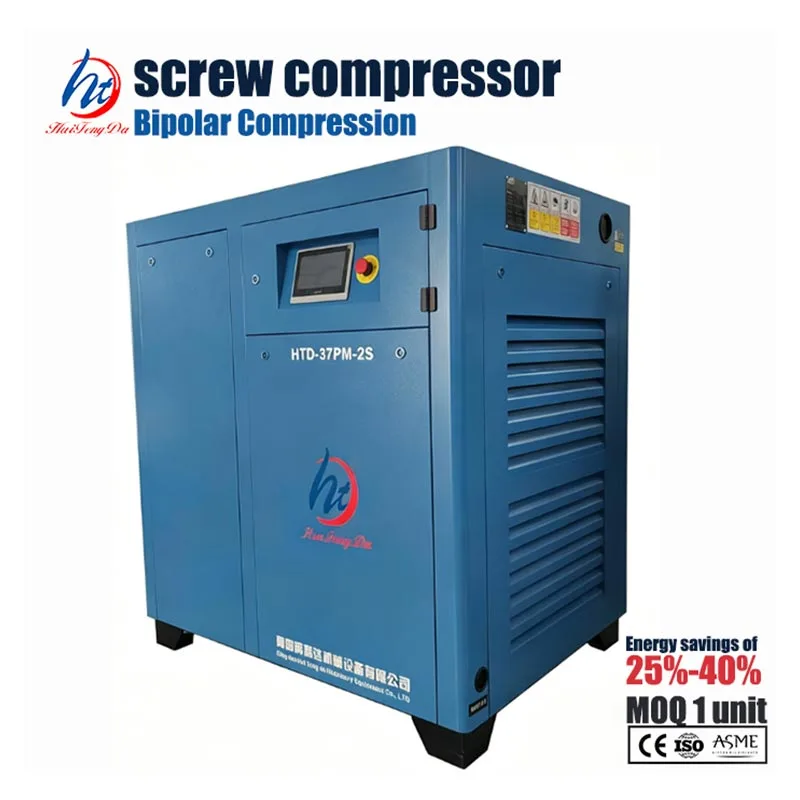
| Oil-injected screw compressor | Widely used for industrial air supply and many general pneumatic applications | Requires effective oil separation and treatment; assess carefully where contamination could reach food. |
| Reciprocating compressor | Can suit intermittent demand and selected smaller-scale operations | Evaluate pulsation, noise, duty cycle, maintenance, and suitability for continuous production. |
| Centrifugal compressor | Can provide high flow for large, relatively steady industrial demand | Usually requires a substantial, stable air demand to justify the investment. |
Oil-Free vs. Oil-Injected Compression
Oil-free compressors avoid introducing lubricant into the compression chamber, making them an important option for applications with strict oil-contamination controls. They can simplify oil management, although the complete system still needs to control moisture, particles, ambient contaminants, and downstream contamination.
Oil-injected compressors may remain suitable for some non-contact applications when a documented risk assessment and properly designed treatment system support their use. However, downstream filters should not be treated as an automatic substitute for eliminating a contamination source where the application demands particularly stringent controls.
When evaluating an air compressor for food processing, specify the required air quality at the point of use instead of relying solely on product labels such as "oil-free" or "food grade."
5. What Does Food-Grade Compressed Air Require?
Food-grade compressed air is air managed to prevent unacceptable contamination in its intended application. The required quality depends on how the air interacts with food and food-contact materials, as well as applicable regulations, customer specifications, and the facility's food safety management system.
Understanding ISO 8573-1
ISO 8573-1 is an international standard that classifies compressed air purity according to three principal contaminant categories: solid particles, water, and total oil. Its classification system helps manufacturers define measurable air quality requirements and communicate them to compressor and treatment-equipment suppliers.
Class 0 is a user-defined category with limits more stringent than Class 1 for the specified contaminant. It does not mean that compressed air is absolutely free of every contaminant. The applicable class should be agreed upon and supported by suitable documentation and measurement.
| Quality Parameter | What It Controls | Questions to Ask |
|---|---|---|
| Particles | Solid contaminants in compressed air | What particle class is required at each point of use? |
| Water | Moisture content and pressure dew point | Is refrigerated drying sufficient, or is desiccant drying needed? |
| Total oil | Oil aerosols, liquid oil, and oil vapor | What oil class is required, and how will it be verified? |
| Microbiological quality | Potential microbial contamination | Does the risk assessment require microbiological testing or point-of-use filtration? |
Why Filtration and Drying Matter
Air treatment should be designed around the required purity and operating conditions. Particulate filters, coalescing filters, activated carbon equipment, refrigerated dryers, desiccant dryers, and sterile-grade filters serve different purposes and are not interchangeable.
- Particulate filtration: Controls solid contaminants to the specified level.
- Coalescing filtration: Removes liquid aerosols and fine droplets within its rated performance.
- Activated carbon treatment: Can reduce certain oil vapors and odors when correctly selected and maintained.
- Air drying: Reduces moisture and helps prevent downstream condensation.
- Sterile-grade filtration: May be required for selected critical applications, subject to validated installation and maintenance procedures.
Food manufacturers should define measurable acceptance criteria and establish a risk-based verification schedule. Depending on the application, this may include testing for particles, water, oil, and microbiological contamination.
Applicable food safety requirements vary by market and process. Manufacturers should verify current local regulations and relevant standards with qualified food safety and compressed air specialists.
6. How Do You Select the Right Air Compressor?
A well-selected compressor balances air quality, production requirements, reliability, and long-term operating costs. Oversizing can increase capital and energy expenses, while undersizing may cause pressure drops, slow production, and equipment malfunctions.
Step 1: Calculate Airflow Demand
List every machine that uses compressed air and determine its required flow under actual operating conditions. Consider simultaneous operation, intermittent demand, production peaks, and planned expansion. Use free air delivery (FAD) figures measured at the relevant conditions when comparing compressor performance.
Do not simply add every machine's maximum nameplate demand without considering realistic operating patterns. At the same time, avoid assuming that all machines operate independently when production schedules indicate otherwise.
Step 2: Determine Required Pressure
Identify the minimum pressure required at each point of use. Account for pressure losses across filters, dryers, piping, valves, and fittings. The compressor discharge pressure must support the actual demand without unnecessarily increasing the system pressure.
Step 3: Classify Food Contact Risks
Determine whether compressed air contacts exposed food, primary packaging, food-contact surfaces, or only non-contact machinery. Use the facility's hazard assessment to define suitable compressor technology, filtration, drying, and verification requirements.
Step 4: Evaluate Operating Conditions
- Ambient temperature, humidity, dust, and intake air quality.
- Available installation space and ventilation.
- Operating hours and expected production growth.
- Electrical supply, energy costs, and control requirements.
- Noise limits, service access, and spare-part availability.
- Required backup capacity and acceptable downtime.
Step 5: Compare Total Cost of Ownership
The initial purchase price is only one part of the investment. Electricity, filter elements, dryer energy, routine servicing, condensate management, downtime, and equipment lifespan can significantly affect the total cost of ownership.
Request documented performance data at the intended operating pressure, a clear maintenance schedule, warranty conditions, and support arrangements before making a final decision.
7. How Can Food Factories Improve Efficiency and Reduce Costs?
Compressed air is a useful but often expensive industrial utility. Efficient system design and disciplined operation can reduce electricity consumption without compromising production reliability or air quality.
Choose Capacity That Matches Demand
Match compressor capacity to the measured demand profile. Where demand varies substantially, a suitable variable-speed drive or a coordinated multi-compressor control system may reduce unnecessary unloaded operation. These options should be evaluated against the actual load pattern and operating pressure.
Find and Repair Air Leaks
Leaks in fittings, hoses, valves, and pipe connections waste compressed air even when production equipment is idle. Regular leak surveys and timely repairs can reduce unnecessary compressor runtime and help maintain stable pressure.
Reduce Unnecessary Pressure
Higher discharge pressure generally increases energy consumption. Review pressure requirements at the most demanding points, inspect restrictions, and avoid using excessive pressure to compensate for poorly designed piping or clogged filters.
Maintain Dryers and Filters
Blocked filters can create pressure losses, while poorly maintained dryers can allow moisture to enter the distribution system. Follow manufacturer service intervals and monitor pressure differential, dew point, and other relevant operating indicators.
Recover Heat Where Practical
Compression generates heat that may be recoverable for suitable facility heating or hot-water applications. Assess the temperature, demand profile, installation cost, and food safety implications before implementing a heat recovery project.
8. How Should Food Processing Air Compressors Be Maintained?
Preventive maintenance helps preserve air quality, prevent unexpected failures, and extend equipment service life. A maintenance program should cover the compressor itself and the entire compressed air distribution and treatment system.
Recommended Maintenance Activities
- Daily or routine checks: Review operating pressure, temperature, alarms, unusual noise, and visible condensate issues.
- Filter inspection: Monitor pressure differential and replace elements according to rated conditions and manufacturer guidance.
- Dryer maintenance: Check dew point performance, drains, controls, and service requirements.
- Leak detection: Inspect connections, hoses, valves, and distribution lines at planned intervals.
- Air quality verification: Test relevant contaminants according to the documented risk assessment and applicable requirements.
- Condensate management: Maintain drains and dispose of collected condensate according to its composition and local environmental rules.
- Service documentation: Record maintenance activities, replacement parts, test results, and corrective actions.
Common Problems and Possible Causes
| Problem | Possible Causes | Recommended Action |
|---|---|---|
| Low operating pressure | Leaks, undersized capacity, clogged filters, or excessive demand | Measure demand and pressure losses; inspect the distribution network. |
| Moisture in air lines | Dryer malfunction, overloaded dryer, or failed drains | Check dew point, dryer capacity, drains, and ambient conditions. |
| High energy consumption | Leaks, excessive pressure, poor controls, or inefficient loading | Review load profiles, repair leaks, and optimize control settings. |
| Unusual noise or temperature | Ventilation problems, wear, or abnormal operating conditions | Follow the manufacturer's troubleshooting procedure and arrange service if necessary. |
Any suspected contamination affecting exposed food or food-contact surfaces should be handled through the facility's established food safety procedures. Equipment repairs alone do not replace the need to assess potentially affected products and verify that air quality has been restored.
9. What Should Buyers Check Before Purchasing?
Procurement teams should compare complete system proposals rather than compressor models alone. A practical checklist helps align engineering, food safety, production, and purchasing teams before the order is placed.
- Application: Confirm the processes and equipment that will consume compressed air.
- Air quality: Specify particle, water, and oil requirements, plus any additional microbiological controls.
- Capacity: Verify airflow at the required pressure and actual operating conditions.
- Compressor technology: Evaluate oil-free and lubricated options against the contamination risk assessment.
- Air treatment: Confirm that dryers, filters, receivers, and drains are correctly sized.
- Energy performance: Request comparable performance data and estimated operating costs.
- Reliability: Review duty cycle, redundancy, service access, and spare-parts availability.
- Documentation: Obtain technical datasheets, applicable test reports, maintenance instructions, and agreed acceptance criteria.
- Supplier support: Clarify commissioning, troubleshooting, warranty coverage, and after-sales service.
- Future expansion: Consider additional production lines and realistic demand growth without excessive oversizing.
For manufacturers comparing suppliers, clear technical communication is essential. A capable supplier should be able to discuss application requirements, explain the limitations of its equipment, and help define a system configuration that matches the factory's operating conditions.
Qingdao Huitengda Machinery Equipment Co., Ltd. can be included in the supplier evaluation process for buyers researching industrial air compressor equipment. When requesting a proposal, provide your target pressure, required airflow, operating schedule, intended application, and air quality specification so that equipment suitability can be assessed against your actual production needs.
10. Frequently Asked Questions
What is the best air compressor for food processing?
The best choice depends on the application, air quality requirements, flow demand, pressure, and operating schedule. Oil-free compressors are often preferred where strict oil-contamination control is necessary, particularly in direct-contact applications. Compressor selection should be based on the complete system and documented process requirements.
Is an oil-free compressor necessary for food production?
Oil-free compression is an important option when compressed air directly contacts food or food-contact surfaces and stringent oil control is required. However, the specific requirement should be established through a risk assessment and applicable regulations. Oil-free compression does not eliminate every potential contaminant, so suitable drying, filtration, maintenance, and verification remain important.
What air quality standard applies to food processing?
ISO 8573-1 is widely used to classify compressed air by particles, water, and oil. The appropriate classes depend on the application and contamination risk. Additional food safety requirements and microbiological controls may apply, so manufacturers should verify the requirements relevant to their market and production process.
How do I calculate the required compressor capacity?
Calculate the demand of connected equipment under realistic operating conditions, considering simultaneous usage, peak demand, and future expansion. Compare the total requirement with the compressor's free air delivery at the intended operating pressure. Also assess receiver capacity, pressure losses, leakage, and the need for backup equipment.
Which air dryer is suitable for a food factory?
A refrigerated dryer may be sufficient for applications with moderate moisture requirements. A desiccant dryer may be necessary when a lower pressure dew point is specified. The decision depends on ambient conditions, the required air quality, downstream equipment, and the risk of condensation. Select and size the dryer for the actual operating conditions.
How often should compressed air quality be tested?
Testing frequency should be established through a documented, risk-based monitoring program. Consider the criticality of the application, applicable requirements, system changes, maintenance events, and previous test results. High-risk applications may require more frequent verification than non-contact utility applications.
Can one compressor supply an entire food processing plant?
One compressor may serve a facility if its capacity, pressure range, air quality treatment, and reliability meet all relevant demands. However, separate treatment trains or dedicated air supplies may be more appropriate when production areas have different purity requirements or when uninterrupted operation is essential.
How can a food factory reduce compressed air operating costs?
Start by measuring demand, repairing leaks, optimizing pressure, maintaining filters and dryers, and improving compressor controls. Evaluate variable-speed operation, heat recovery, and multiple-compressor sequencing where appropriate. These measures can help reduce energy waste while maintaining the required production performance.
Looking for a Reliable Air Compressor for Food Processing?
Choosing the right compressed air equipment can help food manufacturers improve production stability, control contamination risks, and manage long-term operating costs. Start by defining your application, air quality requirements, operating pressure, and airflow demand.
Qingdao Huitengda Machinery Equipment Co., Ltd. can be considered as part of your industrial equipment sourcing process. Share your technical requirements with the supplier to discuss suitable equipment options, system configuration, and project needs.
For assistance with your next compressed air project, contact us to discuss your application requirements and explore an appropriate solution for your production facility.