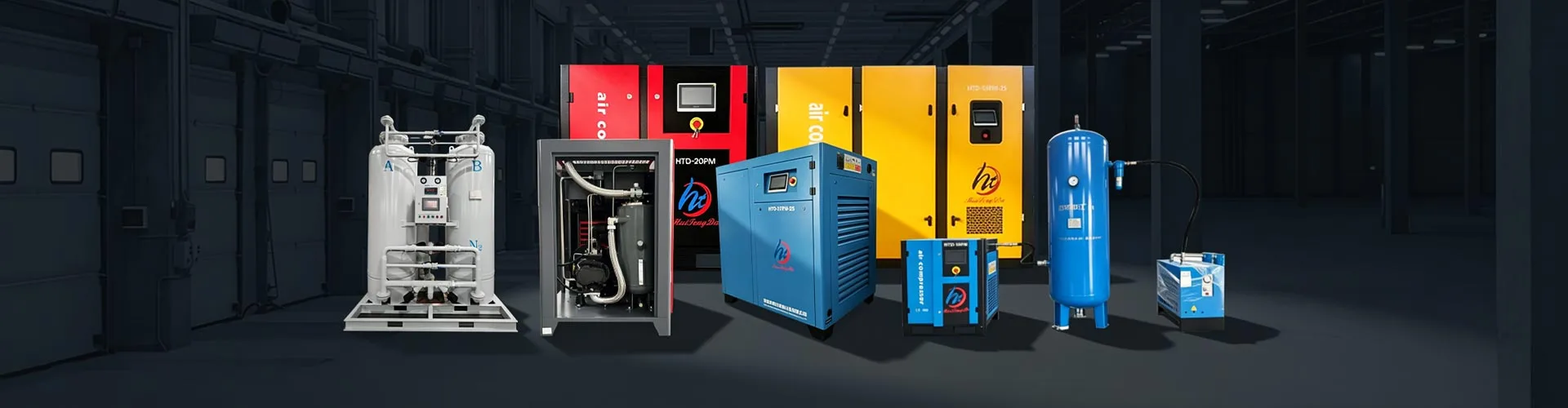
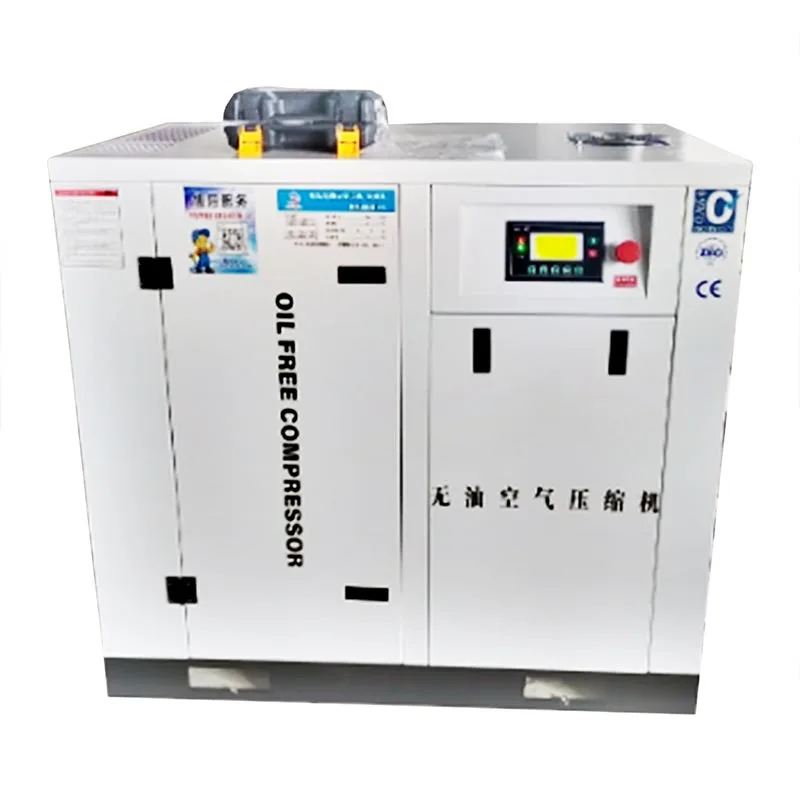
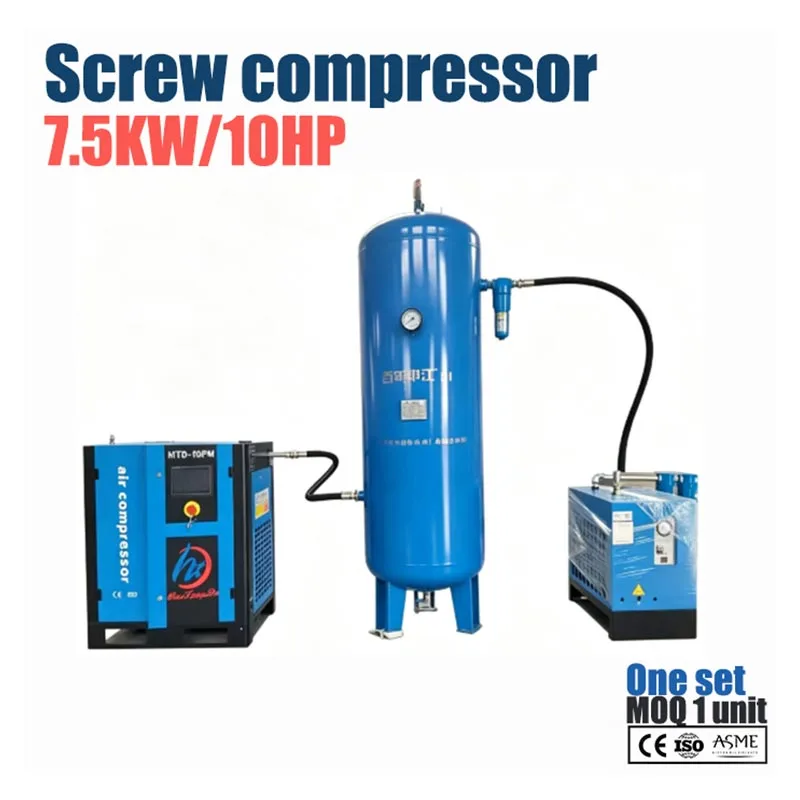
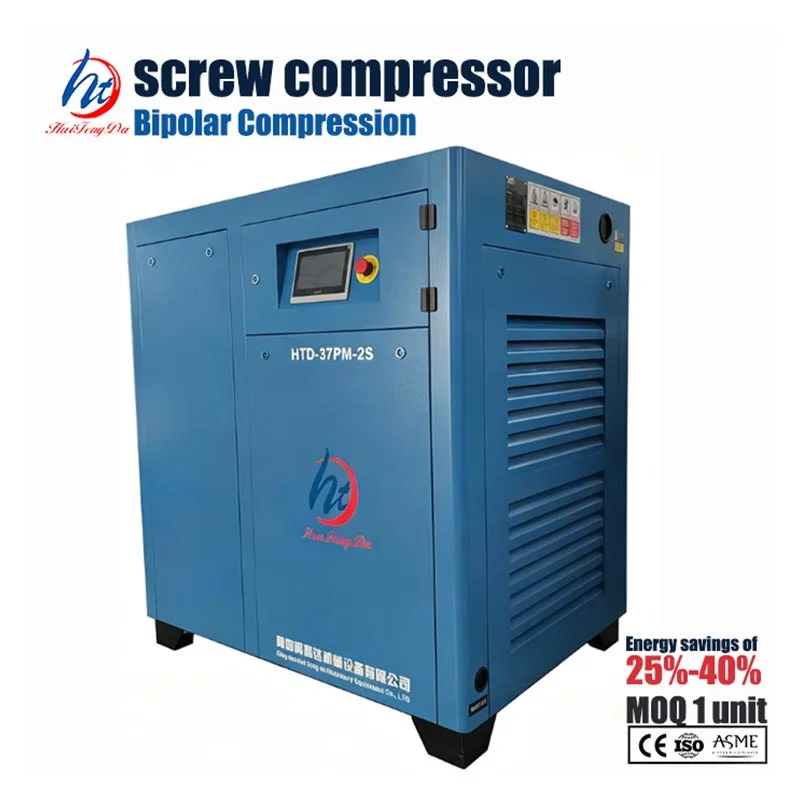
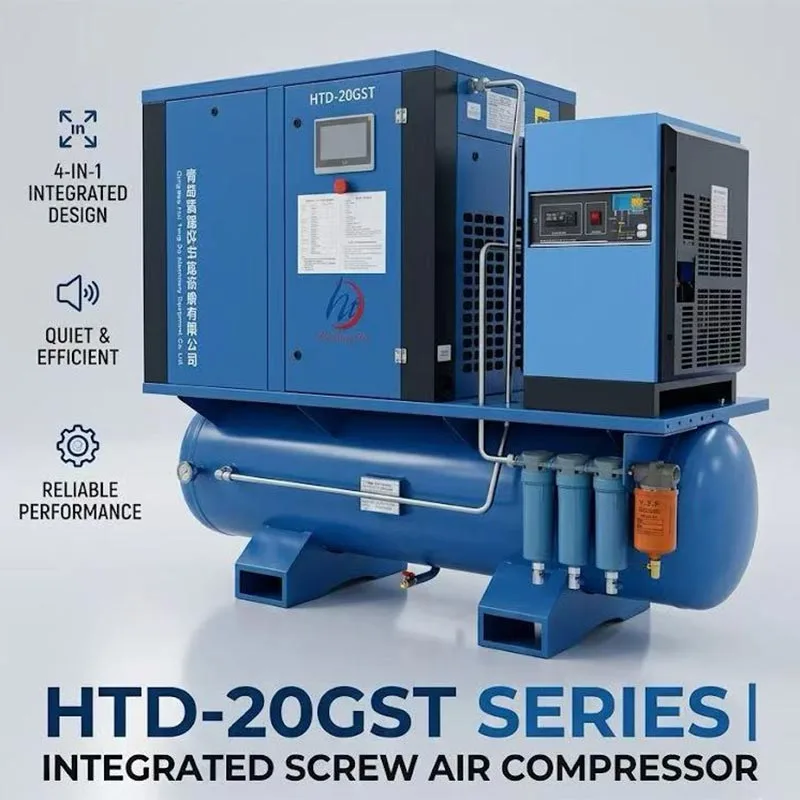
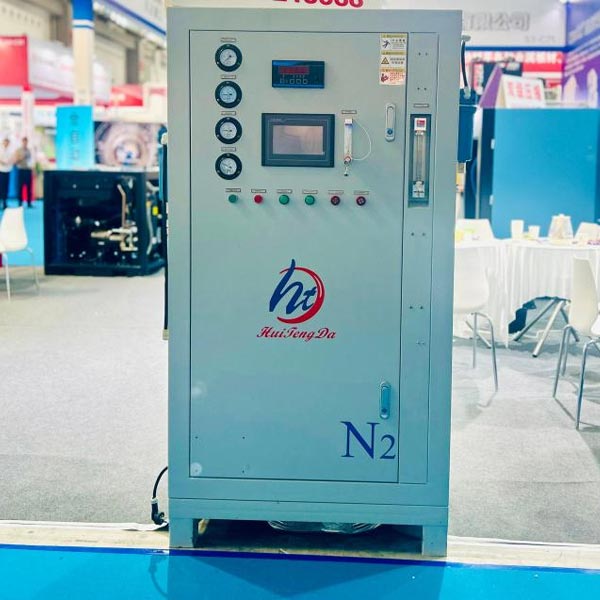
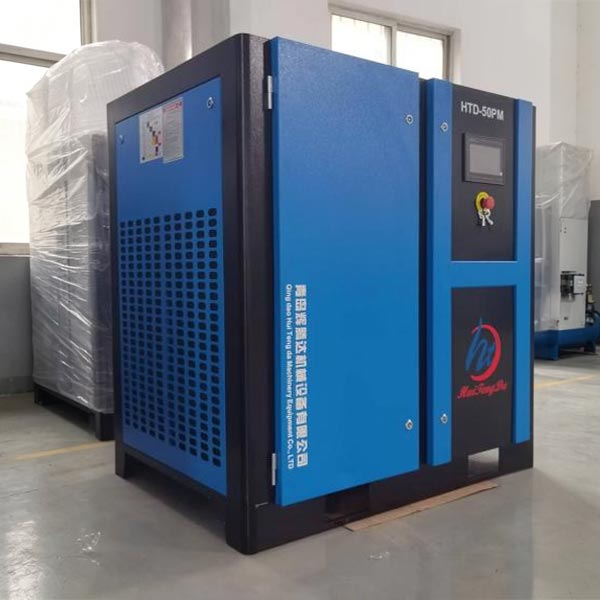
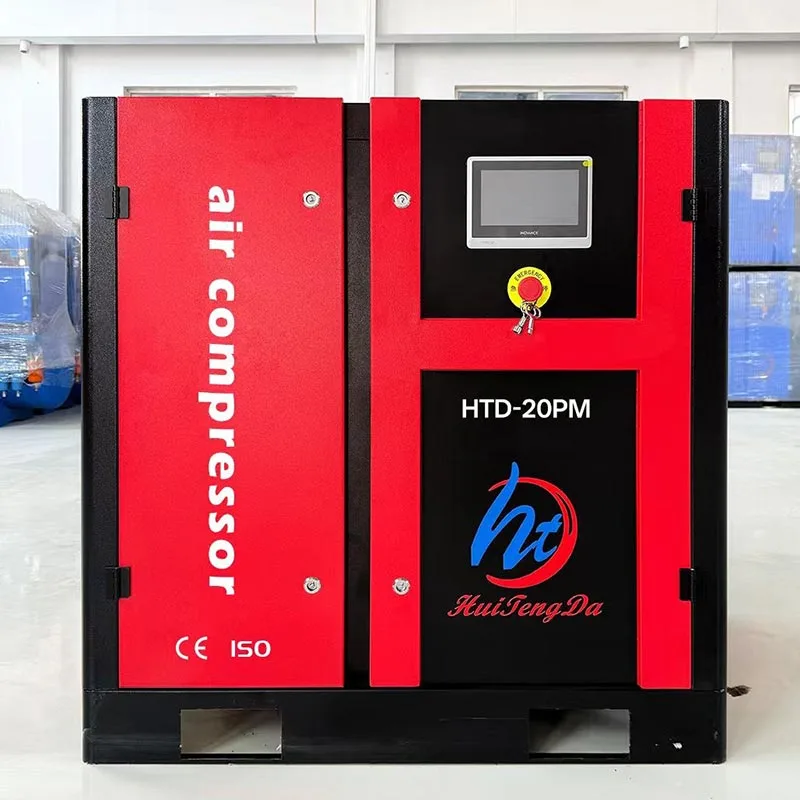
Huitengda factory's Compressed air dryers remove water vapor from compressed air to protect downstream equipment, prevent pipeline corrosion, and avoid product defects. The two mainstream industrial technologies are refrigerated dryers and desiccant (adsorption) dryers. They differ fundamentally in achievable pressure dew point (PDP), operating cost, and application fit. Choosing the right type begins with confirming the dew point your process actually requires—not with selecting a manufacturer.
How Compressed Air Dryers Work
Refrigerated dryers
Refrigerated dryers cool compressed air mechanically, condensing water vapor into liquid that is drained away.
They typically achieve a pressure dew point of around +3°C (≈38°F), corresponding to ISO 8573-1 Class 4 for water vapor, and remove roughly 98% of moisture from the air stream.
This is sufficient for general instrumentation, pneumatic tools, and most workshop assembly applications.
Refrigerated dryers cannot reach Class 1–3 ultra-dry levels, and they are not suitable for sub-freezing ambient
conditions because condensate would freeze rather than drain.
Desiccant dryers
Desiccant dryers pass compressed air over a bed of adsorbent material that binds water vapor to the desiccant’s
internal pore structure. Twin beds alternate between drying and regeneration, allowing continuous operation.
Achievable dew points extend to −40°C or lower (and down to −70°C in specialty configurations),
making desiccant dryers the standard choice for instrument air, laser processing, electronics, pharmaceutical
production, and other high-precision processes where even trace moisture causes oxidation, freezing, or product failure.
Refrigerated vs. Desiccant: Key Selection Criteria
Comparison of refrigerated and desiccant compressed air dryers
|
Parameter
|
Refrigerated dryer
|
Desiccant dryer
|
|
Typical pressure dew point
|
+3°C / ≈38°F
|
−40°C to −70°C
|
|
ISO 8573-1 water vapor class
|
Class 4 (typical)
|
Class 1–3
|
|
Capital cost
|
Lower
|
Higher
|
|
Operating & maintenance cost
|
Low to moderate
|
Higher (purge air or heater energy)
|
|
Best fit
|
General industrial air, pneumatic tools, indoor plant air
|
Laser cutting/welding, electronics SMT, instrument air, pharma, critical processes
|
|
Sub-freezing ambient suitability
|
Not suitable
|
Suitable
|
The cost logic is straightforward: refrigerated dryers are economical and low-maintenance for the majority of
industrial users, while desiccant dryers are specified only when the process demands a dew point that
refrigeration cannot deliver. Over-specifying dew point is a common and avoidable energy penalty—a
desiccant dryer running at −70°C where +3°C is sufficient adds unnecessary operating cost without process benefit.
How to Select the Right Air Dryer
Dryers are rated at standardized conditions; actual site conditions determine the true capacity required.
Collect the following inputs before sizing:
-
Required flow rate (m³/h or cfm)
-
Operating pressure (bar or psig)
-
Compressor discharge temperature / inlet air temperature (°C)
-
Ambient temperature at the installation point (°C)
-
Required pressure dew point (°C)
-
Allowable pressure drop across the dryer
The corrected air flow capacity is calculated by applying correction factors for inlet temperature, ambient
temperature, and inlet pressure to the nominal flow rating. A dryer selected on nominal flow alone will be
undersized in real conditions. As a rule of thumb, specify the pressure dew point at least 10°C below the lowest expected temperature in the distribution piping to prevent condensation
at the point of use.
Pre-filtration is not optional. Oil, dust, and condensed water must be removed upstream of the
dryer to protect the heat exchanger or desiccant bed. A coalescing pre-filter with automatic drain should be
installed immediately before the dryer inlet; filter elements are typically replaced annually under normal
conditions, and more frequently in dirty or oil-carrying systems. Neglecting pre-filtration is one of the fastest
ways to shorten dryer service life and degrade outlet air quality.
Applications
Dryer selection follows the moisture sensitivity of the process, not the size of the facility.
-
Laser cutting & laser welding—desiccant dryer; moisture causes lens fogging, oxidation, and weld porosity.
-
Electronics SMT & semiconductor—desiccant dryer; trace moisture leads to micro-terminal oxidation and soldering defects.
-
Food packaging & pharmaceutical—desiccant dryer for direct-contact and high-humidity-sensitive processes; refrigerated dryers may serve utility air where Class 4 is acceptable.
-
Automotive manufacturing & general machining—refrigerated dryer for plant air, pneumatic tools, and assembly equipment.
-
Chemical, painting, and coating—dryer type determined by whether the air contacts the product or only actuates instruments.
Frequently Asked Questions
What dew point can a refrigerated dryer achieve?
Typically +3°C (≈38°F) pressure dew point, meeting ISO 8573-1 Class 4. It is not designed for Class 1–3 ultra-dry air or sub-freezing environments.
When should I choose a desiccant dryer instead?
When the process requires a pressure dew point below what refrigeration can deliver—commonly −40°C or lower for laser, electronics, instrument air, and critical processes.
Can dryers run continuously?
Industrial refrigerated and desiccant dryers are designed for continuous duty under rated conditions, provided pre-filtration and drainage are maintained.
What happens if I skip the pre-filter?
Oil and particles foul the heat exchanger or saturate the desiccant prematurely, reducing drying performance and increasing pressure drop and maintenance cost.