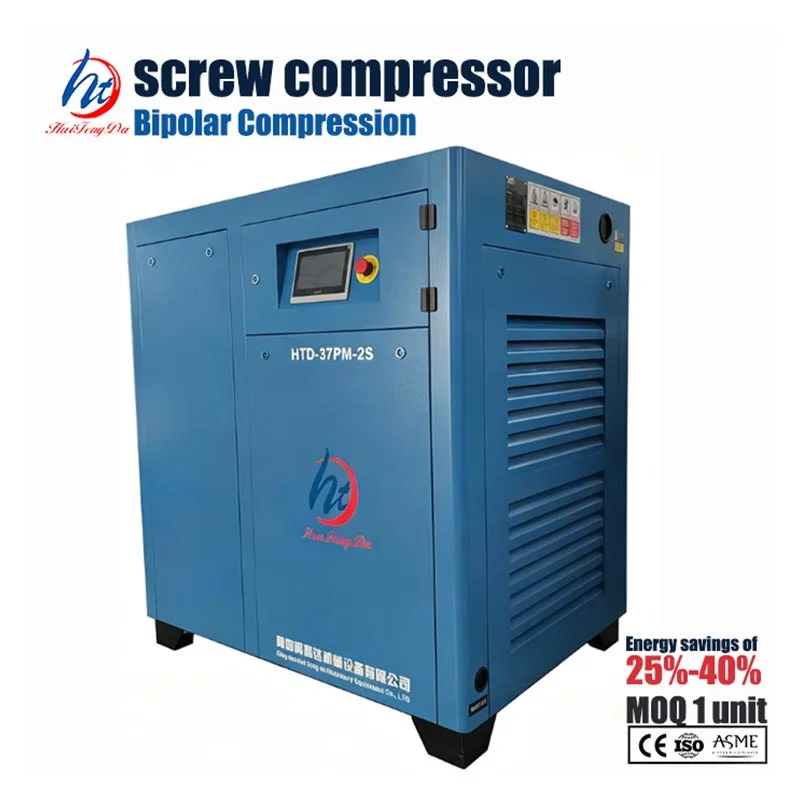
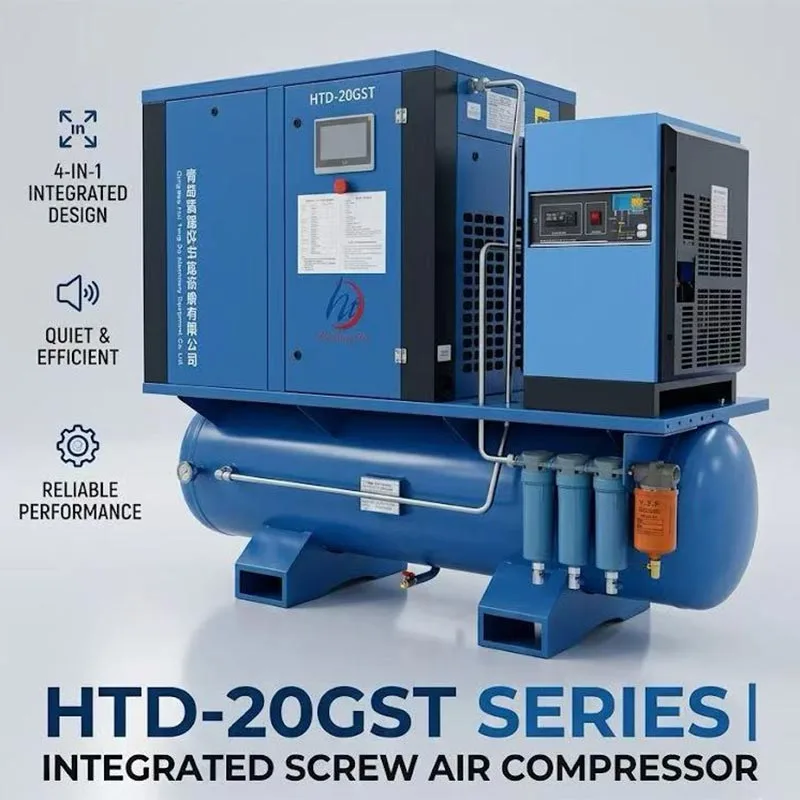
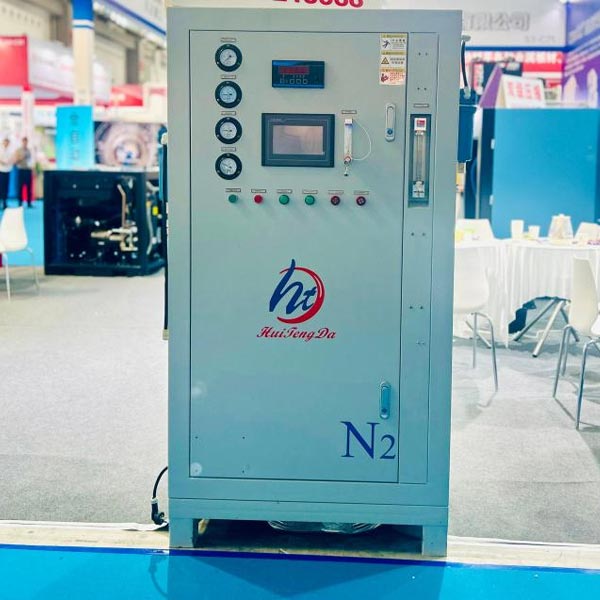
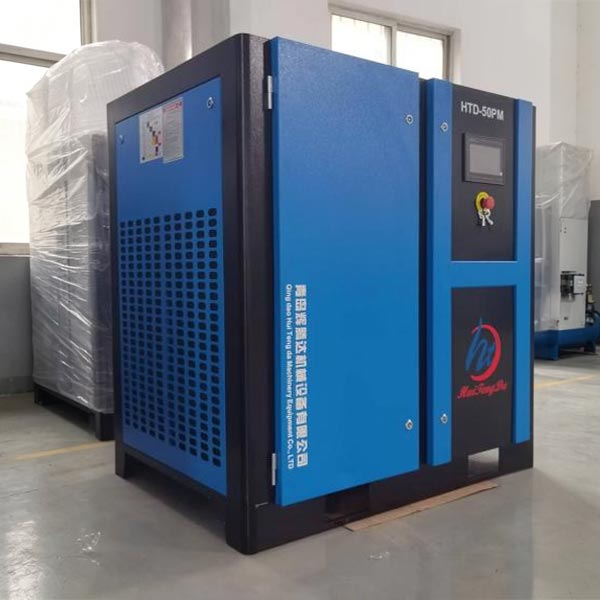
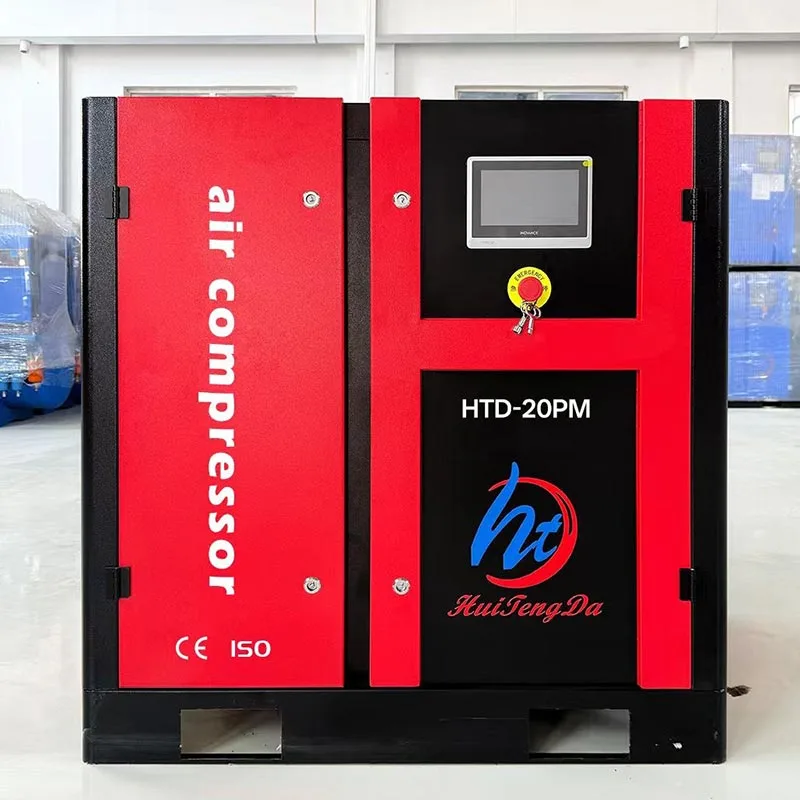
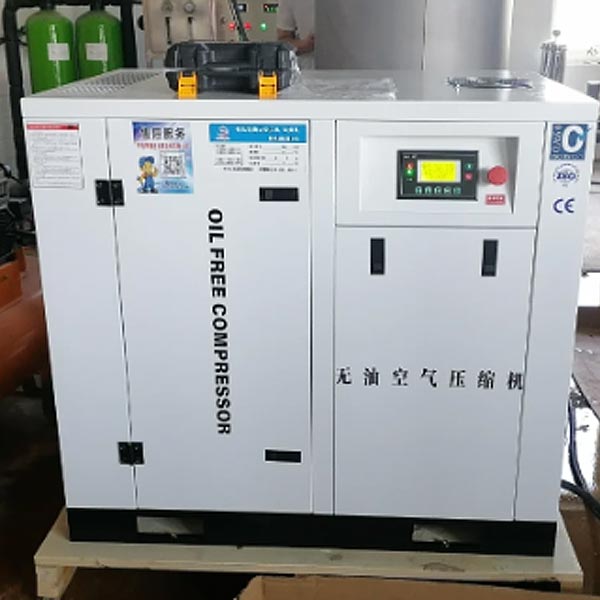
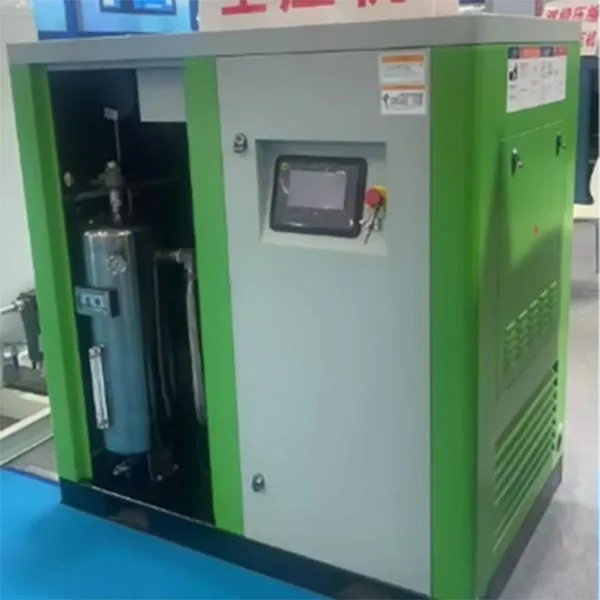
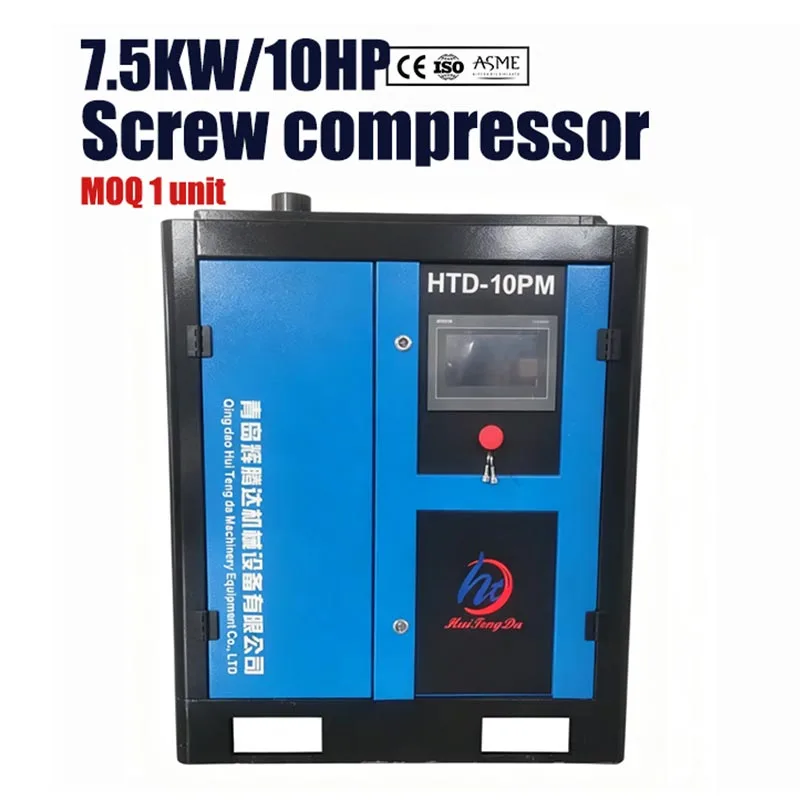
Huitengda factory's Two-Stage Compression Air Compressors split the compression job between two screw air ends in series: a low-pressure stage and a high-pressure stage. Air is compressed once, cooled in an inter-stage cooler, then compressed again. Splitting the pressure ratio this way keeps discharge temperature lower, reduces internal air leakage and cuts the energy needed to reach the same working pressure. For plants running high pressure or heavy continuous duty, that difference shows up on the electricity bill every month.
Our two-stage range is built around permanent magnet VSD drive and 5-axis precision-ground rotors, and is available in oil-lubricated and water-lubricated oil-free versions, integrated or split layouts, and air-cooled or water-cooled configurations. Working pressures of 10, 13 and 16 bar cover most high-pressure production lines. Every unit is run through a full-load aging test before it leaves the factory.
Where Two-Stage Compression Pays Off
The savings from Two-Stage Compression Air Compressors are not uniform—they depend on pressure level, duty cycle and how the compressor is controlled. At the same working point, two-stage models typically use roughly 12%–18% less energy than single-stage compressors of equivalent output; under high-pressure, near-continuous duty the gap can widen toward 30%. The reason is partly thermodynamic (lower compression ratio per stage, inter-stage cooling) and partly mechanical (precision-ground rotors with tighter clearances, less internal leakage, higher volumetric efficiency).
Pairing the two-stage air end with a permanent magnet motor and variable frequency drive adds a second layer of savings: the compressor tracks actual air demand and slows down when consumption drops, instead of loading and unloading at fixed speed. That combination is what makes the series worthwhile for plants that run long hours but rarely at a perfectly flat load.
If your air demand is genuinely constant and light, the two-stage premium is harder to recover—a fixed-speed single-stage machine is usually the more economical purchase. The two-stage case is strongest where pressure is high, run hours are long, and load varies.
Choosing the Right Configuration
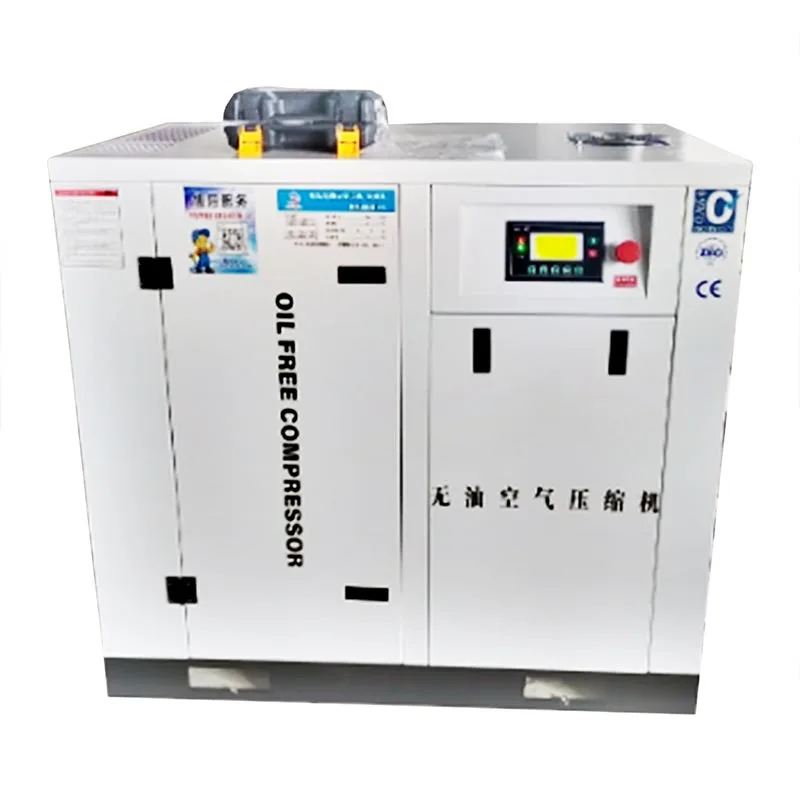
Lubrication. Oil-lubricated two-stage compressors are the general-purpose choice for laser cutting, bottle blowing, chemical processing, machinery and pressure testing, paired with high-grade filtration. Where oil carryover is unacceptable—food, pharmaceutical, electronics and semiconductor production—water-lubricated oil-free models use water for sealing and cooling in the compression chamber instead of oil, and produce oil-free air.
Oil-free specifics. The water-lubricated two-stage design replaces the oil sump with a water circulation and purification loop, adds a water filter, and applies an anti-corrosion coating to the rotors. Cabinets use upgraded rust protection and internal sound insulation, and the water circuit is pressure- and leak-tested before assembly. Aging tests check water quality and outlet oil content alongside the usual pressure, temperature and vibration readings.
Layout. Integrated units arrive as a single skid, install quickly and take less floor space. Split units separate the air end and control cabinet, which suits tight or awkward plant rooms and makes servicing easier.
Cooling. Air-cooled models carry their own fan and need no external cooling water—the default for most standard workshops. Water-cooled models use a water-cooled heat exchanger, take more space, and are the better fit for high ambient temperatures and large motors running continuously.
Sizing. Start from peak air consumption and add a 20%–30% margin to cover pipeline pressure drop and demand spikes. Undersizing a two-stage machine throws away most of its efficiency advantage; oversizing wastes capital.
Typical Applications
Large laser cutting and precision machining rely on the stable pressure a two-stage machine holds under varying cut loads. PET bottle blowing needs high pressure at high flow and runs continuously. Chemical processing and pipeline pressure testing call for sustained high-pressure air. General machinery manufacturing benefits from the lower running cost over long shifts. And in food, pharmaceutical and electronics/semiconductor plants, the water-lubricated oil-free version supplies clean air where contamination is not an option.
Build Quality and Warranty
High- and low-pressure air ends, permanent magnet motors, PLC controllers and heat exchangers are inspected at multiple points before assembly. Each finished unit then runs a full-load aging test to log pressure, temperature and vibration and to catch faults before shipment—not after installation. Low vibration and low noise are byproducts of the balanced rotor design and rigid frame, and they matter for continuous 24-hour operation.
The series carries a 1-year whole-machine warranty covering free repair and spare parts for manufacturing defects. Consumables, damage from improper operation, abnormal power supply and harsh operating conditions fall outside the warranty. Technical response and system-level support are available throughout the service life.
System Support
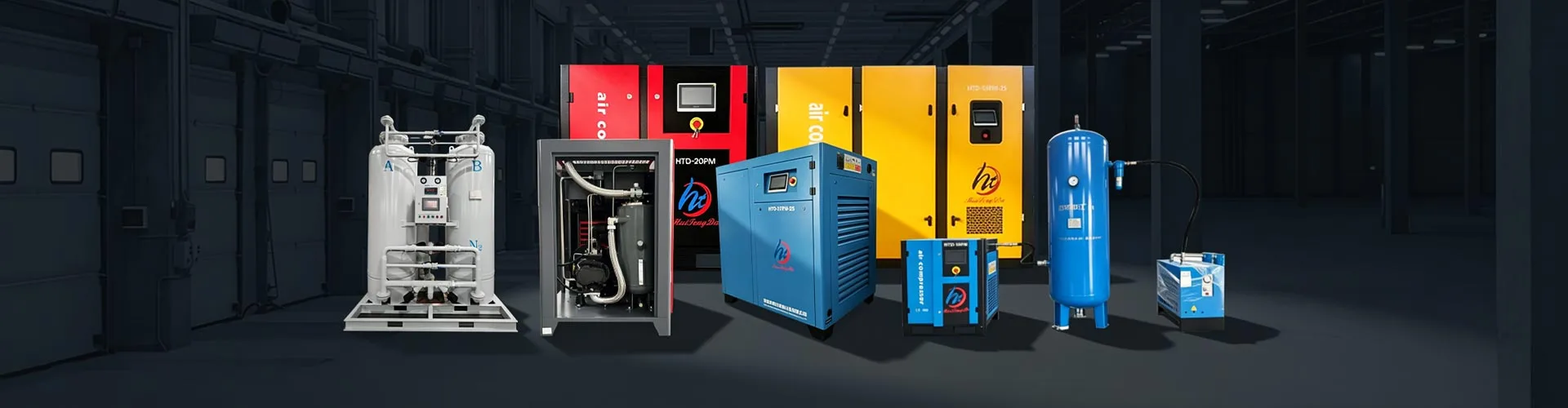
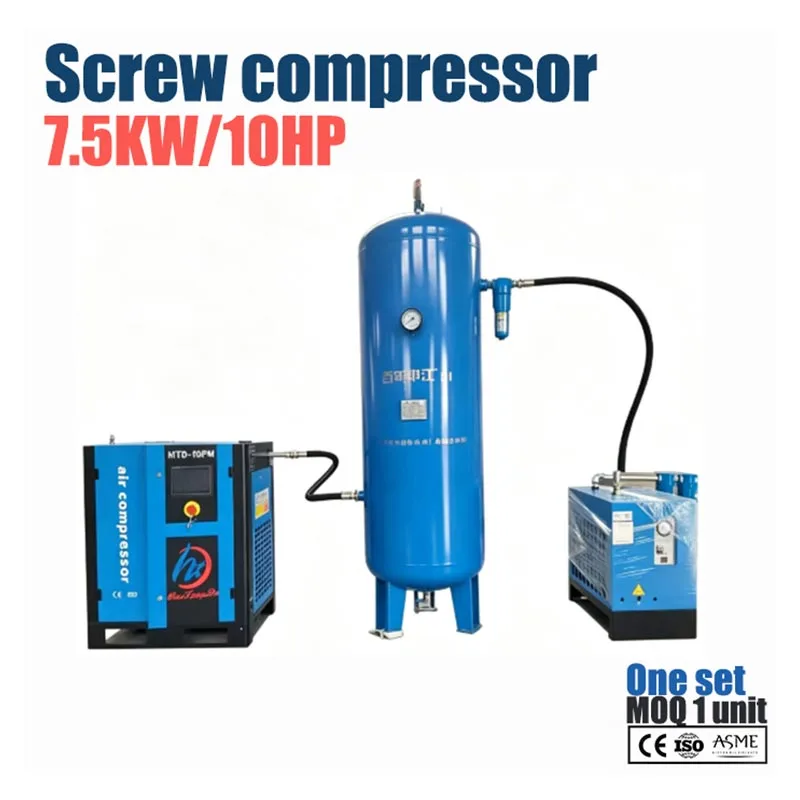
Huitengda is based in Chengyang District, Qingdao, China, and integrates R&D, production, sales and service of complete compressed air equipment—screw air compressors, nitrogen generators, and post-treatment equipment including refrigerated dryers, precision filters, air tanks and waste heat recovery units.
For two-stage projects we handle air demand assessment, equipment and post-treatment matching, pipeline layout, on-site installation, commissioning, operator training and after-sales support, for customers in China and overseas.