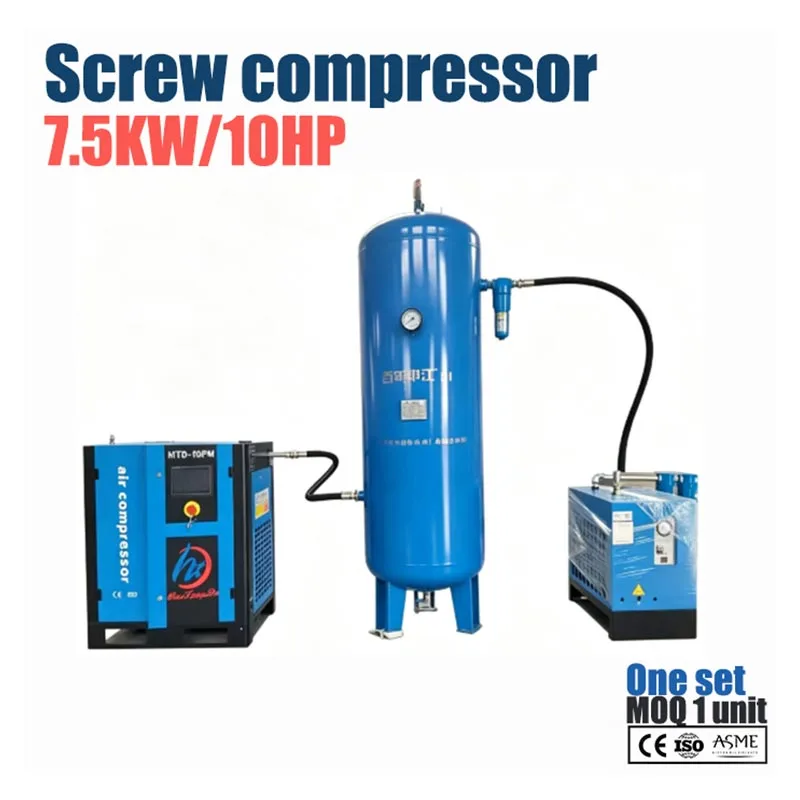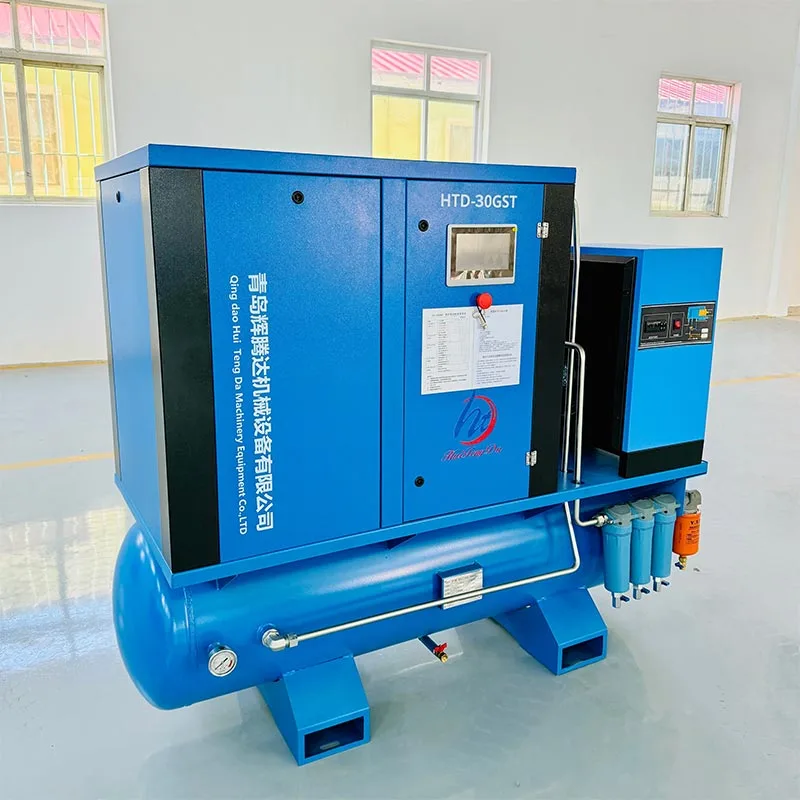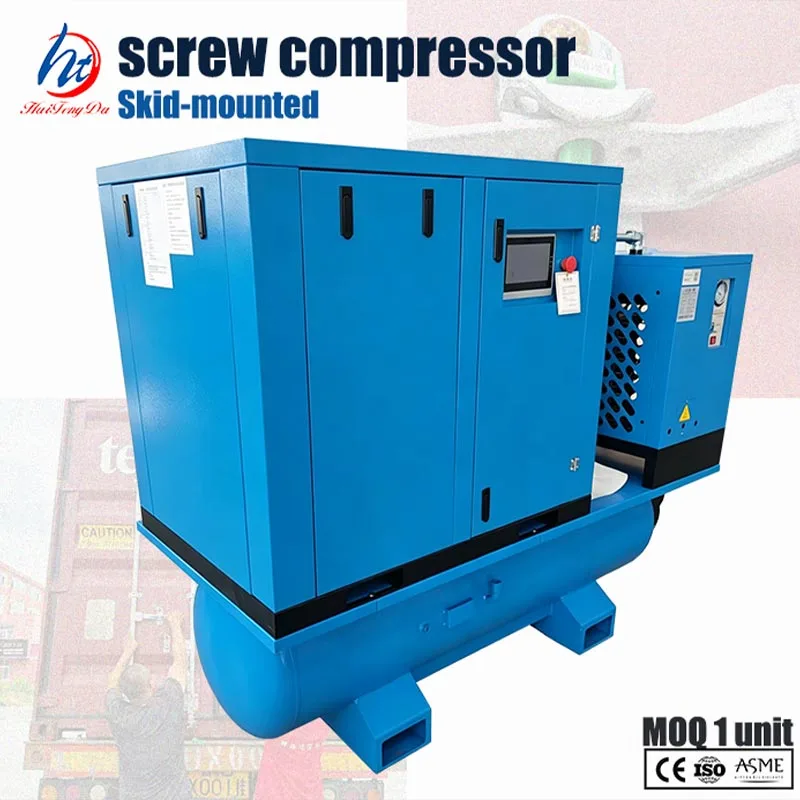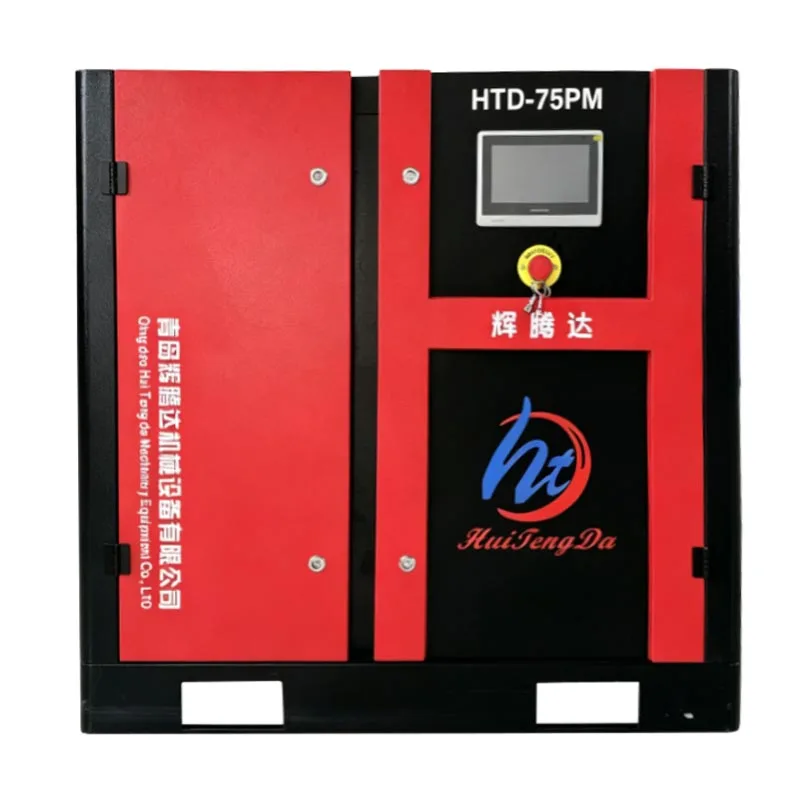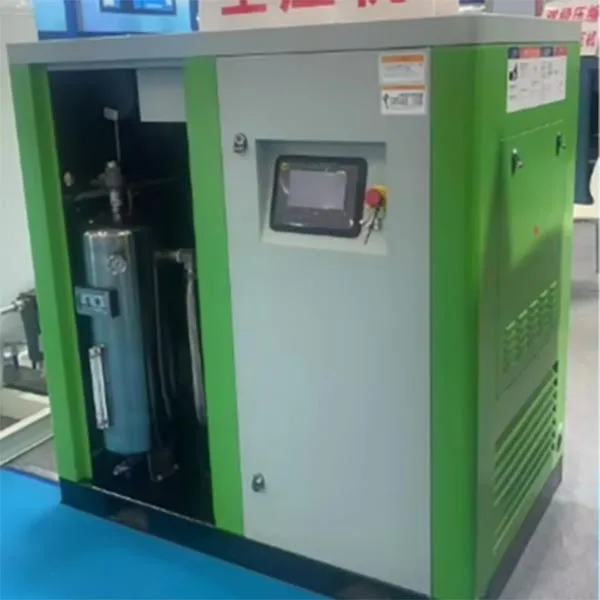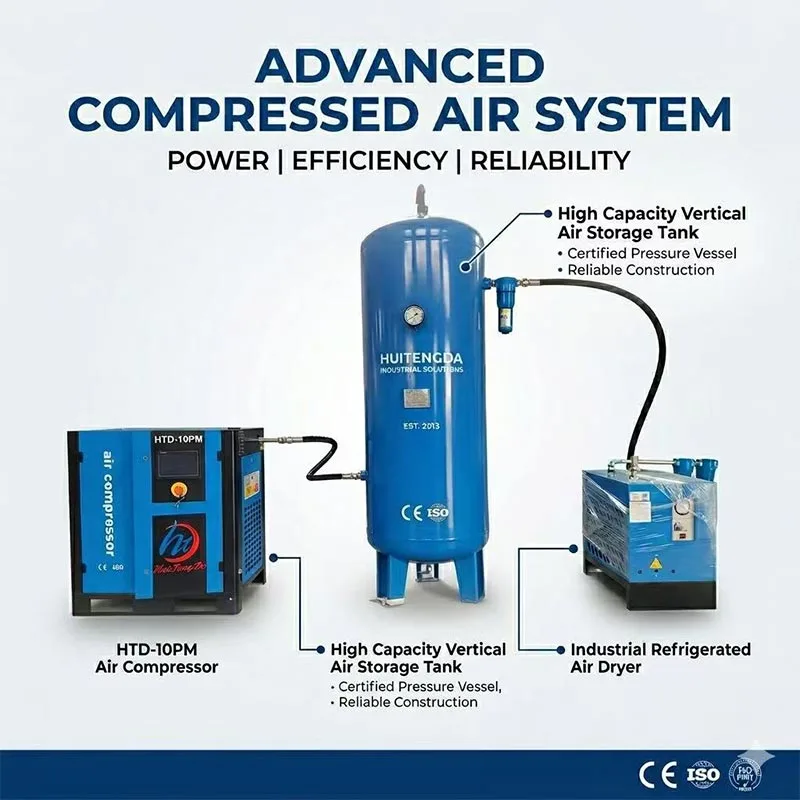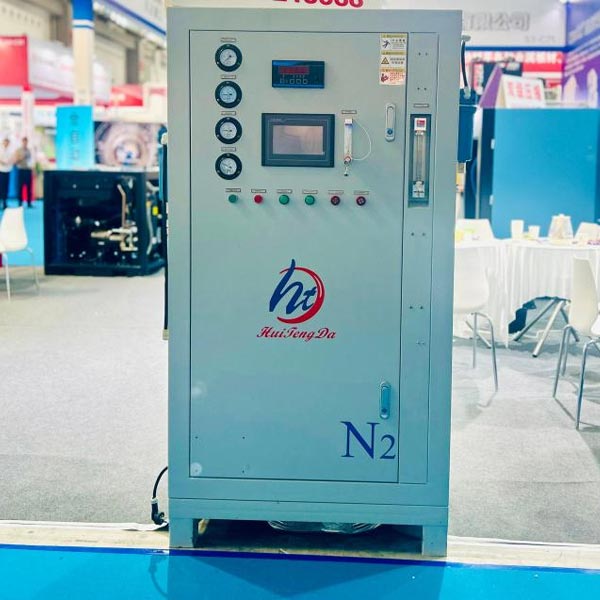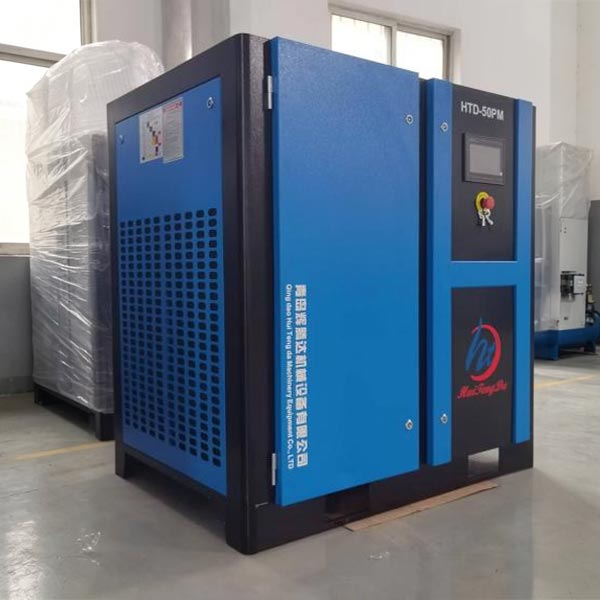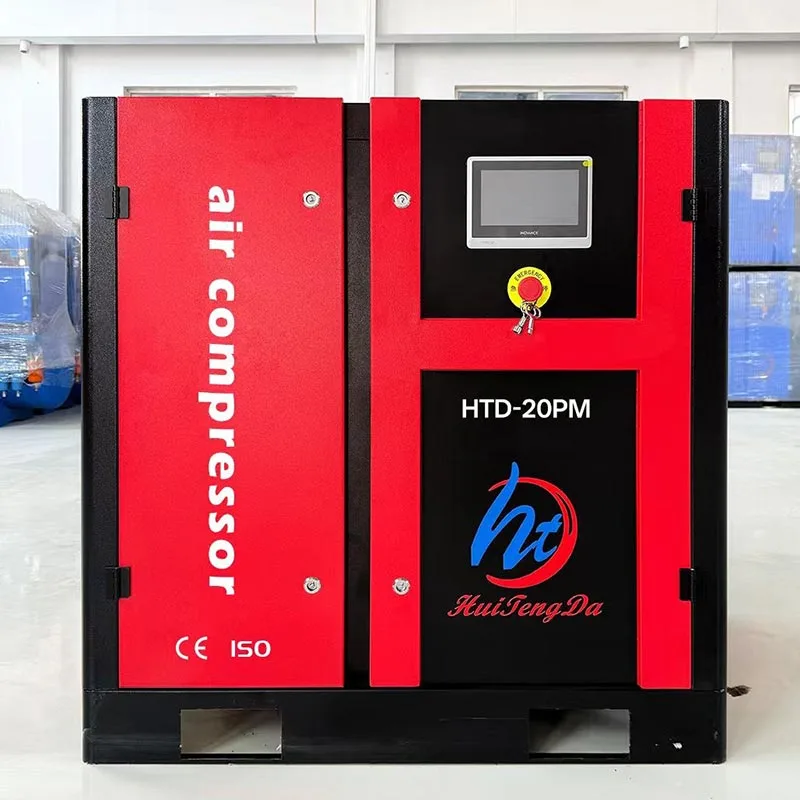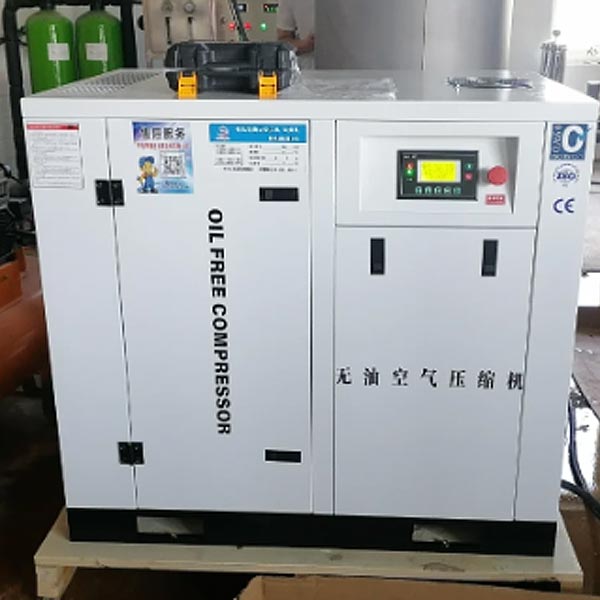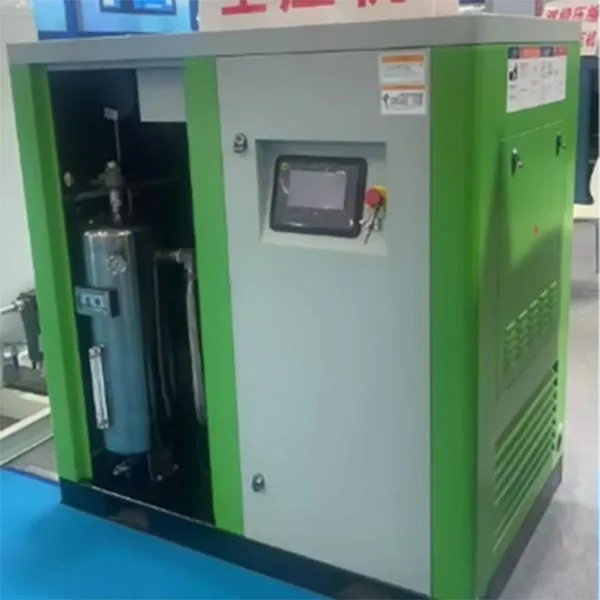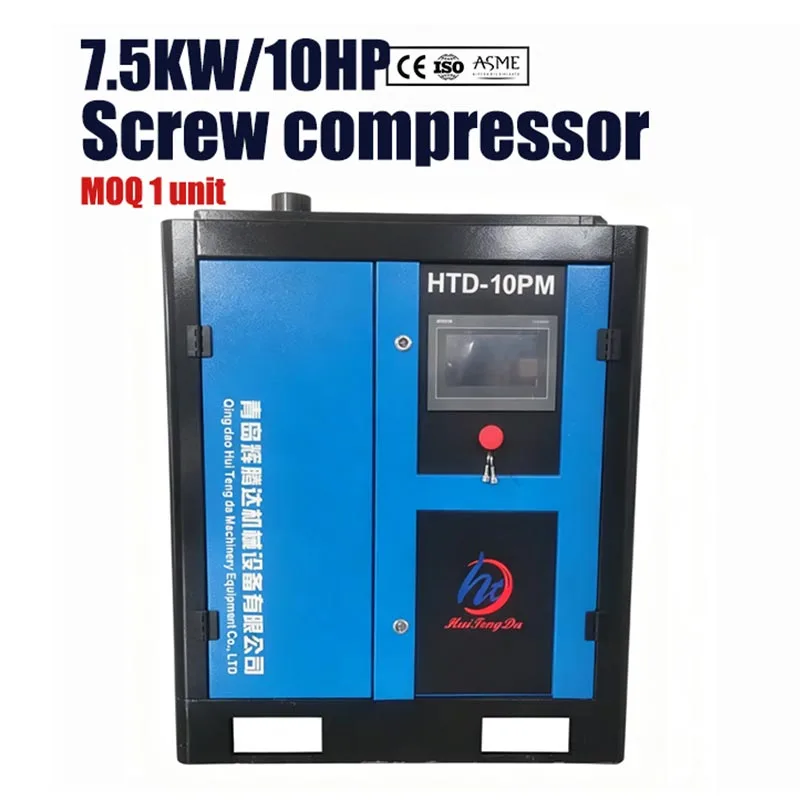

A 10 HP two stage screw air compressor can be a practical solution for businesses that need dependable compressed air, consistent operating pressure, and efficient performance during demanding production schedules. By dividing compression into two stages and cooling the air between them, this design can reduce the compression burden on each stage. However, motor power alone cannot determine whether a compressor is suitable for a particular factory. This guide explains how two-stage compression works, where a 10 HP unit may fit, what specifications buyers should evaluate, and how to control operating costs through correct installation and maintenance. It also outlines the key questions to ask before purchasing industrial compressed air equipment.
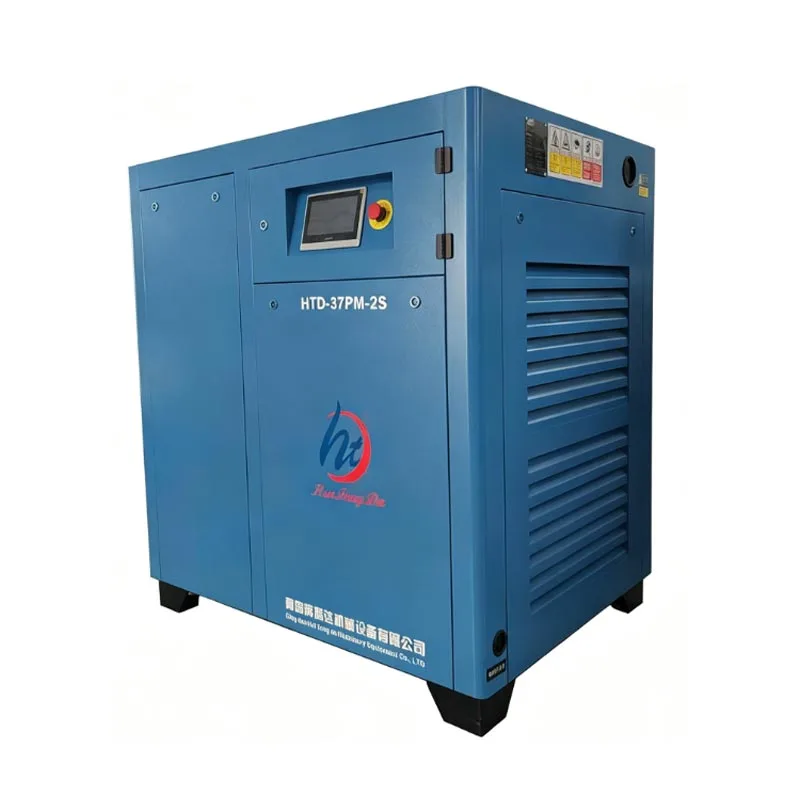
1. What Is a 10 HP Two Stage Screw Air Compressor?
A 10 HP two stage screw air compressor is an industrial compressed air machine with a motor rated at approximately 7.5 kW. It uses rotary screw technology and two successive compression stages to raise atmospheric air to the required delivery pressure.
Unlike a piston compressor that compresses air through reciprocating movement, a rotary screw compressor uses two intermeshing helical rotors. Their rotation traps air and progressively reduces its volume, producing a continuous supply of compressed air. In a two-stage design, the compression process is divided between a low-pressure stage and a high-pressure stage.
This configuration can be useful when a facility needs sustained air delivery and wants to improve compression efficiency at a specified pressure. Nevertheless, not every 10 HP compressor has the same airflow, pressure rating, cooling arrangement, or internal design. Buyers should verify the actual performance data of the model under consideration.
- Motor power: 10 HP, approximately 7.5 kW.
- Working pressure: The pressure required by connected equipment, measured in bar or psi.
- Free air delivery (FAD): The usable airflow delivered at a stated operating pressure.
- Duty requirements: Whether the machine must operate continuously, intermittently, or under varying loads.
- Air quality: The filtration, drying, and oil-control requirements of the application.
For a purchasing team, the central question is not simply whether a machine has a 10 HP motor. It is whether the compressor can meet the plant's real airflow and pressure requirements without excessive energy use or repeated interruptions.
2. How Does Two-Stage Compression Work?
The main principle behind a two stage screw air compressor is to divide the total compression process into two successive steps. This can reduce the pressure ratio handled by each stage and, when appropriately designed, improve the energy efficiency of the overall process.
Stage One: Initial Compression
Ambient air passes through an intake filter before entering the first screw element. As the rotors turn, the trapped air is compressed to an intermediate pressure. Its temperature rises as compression work is performed.
Intermediate Cooling
The partially compressed air then passes through an intercooling arrangement, where heat is removed before the air enters the second stage. Cooling the air helps reduce the work required for further compression. Depending on the system design and ambient conditions, moisture may also condense and need to be drained.
Stage Two: Final Compression
The cooled air enters the second screw element, which raises it to the final discharge pressure. The compressed air then passes through the equipment's designated cooling, separation, and delivery components before entering the downstream air system.
Why the Design Matters
When air is compressed, its temperature increases. Higher temperatures can place additional demands on lubricants, seals, cooling components, and other parts. Dividing compression between two stages with effective intercooling can help manage this thermal load.
Actual performance depends on the compressor's air-end design, intermediate pressure, cooling effectiveness, final pressure, motor efficiency, and control strategy. Two-stage construction alone does not guarantee a particular energy saving or discharge temperature.
3. What Benefits Can This Compressor Deliver?
Potentially Better Efficiency at the Required Pressure
Two-stage compression can reduce the energy needed to achieve certain discharge pressures compared with a suitably comparable single-stage design. The benefit depends on the operating point and the equipment being compared. Buyers should request performance data at the actual required pressure rather than rely on general efficiency claims.
More Consistent Support for Production
Rotary screw compressors are commonly selected for industrial operations requiring a steady supply of compressed air over extended periods. When correctly sized, installed, and controlled, a 10 HP unit may help support production tools and pneumatic equipment without the pronounced supply interruptions associated with an undersized system.
Managed Thermal Conditions
Intercooling reduces the temperature of air between compression stages. Effective temperature management can help protect components and support reliable operation, particularly when the compressor works for long periods. Proper ventilation and regular cooler cleaning remain essential.
More Predictable Operating Costs
Electricity can represent a substantial portion of the lifetime cost of compressed air. A well-matched compressor that avoids excessive pressure, unnecessary unloaded running, and air leakage can help businesses control expenses. A two-stage design may contribute to this goal, but the complete system determines the actual result.
Flexible Integration Into Existing Systems
Depending on the selected configuration, a 10 HP compressor can be integrated with an air receiver, refrigerated or desiccant dryer, filters, condensate drains, and a distribution network. These components should be selected according to the required pressure, airflow, and air-quality specifications.
4. What Applications Can It Support?
A 10 HP two stage screw air compressor may suit smaller industrial operations or individual production areas where compressed air demand is moderate and well understood. Suitability must be established using measured airflow and pressure requirements.
| Application | Typical Compressed Air Needs | What Buyers Should Evaluate |
|---|---|---|
| Small manufacturing workshops | Pneumatic tools and general production equipment | Simultaneous tool demand and working pressure |
| Packaging operations | Actuators, cylinders, and selected packaging machinery | Peak demand during production cycles |
| Metalworking facilities | Clamping, pneumatic controls, and compatible tools | Required pressure, operating hours, and air quality |
| Textile workshops | Pneumatic controls and selected production equipment | Whether the airflow and pressure meet machine specifications |
| Maintenance departments | Workshop tools and intermittent compressed air demand | Duty cycle, peak flow, and expected daily usage |
| Automated assembly cells | Pneumatic positioning and actuating equipment | Pressure stability and simultaneous actuator operation |
These examples are starting points rather than guarantees of suitability. Applications such as abrasive blasting, large pneumatic conveying systems, or multiple high-consumption machines may require considerably more airflow than a 10 HP unit can provide.
Oil-sensitive processes also require special attention. An oil-injected screw compressor does not automatically produce oil-free air. Where product quality or process specifications demand very low oil content, the air treatment system must be designed and verified accordingly.
5. What Specifications Should Buyers Check?
Incorrect sizing is a common source of compressed air problems. A machine that is too small may struggle to maintain pressure when demand peaks. An oversized machine may cost more than necessary and operate inefficiently if the control system is poorly matched to the load.
Confirm Free Air Delivery at the Required Pressure
Free air delivery indicates the amount of air a compressor supplies under stated test conditions, expressed in units such as m³/min or CFM. The value should be checked at the intended discharge pressure. A quoted airflow without a corresponding pressure and measurement basis can be misleading.
Prepare an inventory of the connected equipment, its air consumption, operating schedule, and expected simultaneous use. Include short periods of peak demand and allow for reasonable future expansion, rather than adding an arbitrary margin that could lead to oversizing.
Match Working Pressure to the Actual Process
Determine the minimum pressure required at the point of use. Pressure losses across pipes, filters, dryers, and regulators can make the pressure at a machine lower than the compressor's discharge pressure.
A higher compressor setpoint is not always the answer. Unnecessarily high system pressure can increase energy consumption and worsen leakage losses. Design the distribution system to deliver the required pressure without excessive restrictions.
Evaluate Motor and Electrical Requirements
Check the rated motor power, supply voltage, frequency, starting method, protection requirements, and available electrical capacity. Confirm that the installation complies with local electrical and machinery safety requirements.
Compare Drive and Control Options
Depending on the model, buyers may have a choice of fixed-speed or variable-speed control. Fixed-speed equipment may suit stable demand, while a properly specified variable-speed model can help match output to fluctuating demand. The best choice depends on the load profile, control range, system pressure, and total cost of ownership.
| Selection Factor | Question to Ask | Why It Matters |
|---|---|---|
| Airflow | What is the verified FAD at the target pressure? | Confirms whether the machine can supply the required volume. |
| Pressure | What discharge pressure and operating range are supported? | Prevents pressure shortfalls and unnecessary over-compression. |
| Efficiency | What is the measured power consumption at the duty point? | Supports realistic energy-cost comparisons. |
| Air quality | What filtration and drying equipment is required? | Protects downstream equipment and the production process. |
| Maintenance | What are the service intervals and replacement parts? | Helps estimate downtime and long-term service expenses. |
| Installation | What are the cooling, clearance, and foundation requirements? | Helps prevent overheating and avoidable service problems. |
6. What Determines Energy Consumption and Operating Costs?
The purchase price is only one part of the cost of owning a compressor. Electricity, scheduled maintenance, replacement parts, air treatment, leakage, and production downtime can all affect the final cost over the equipment's service life.
Calculate Electricity Costs Using Real Operating Data
A useful starting point is the following calculation:
Estimated annual electricity cost
Average electrical input (kW) × annual operating hours × electricity price per kWh
For example, if a compressor averages 6.5 kW of electrical input, operates for 4,000 hours per year, and electricity costs $0.12 per kWh, the estimated annual electricity expense is:
6.5 × 4,000 × $0.12 = $3,120 per year.
This is an illustrative calculation, not a performance claim for every 10 HP compressor. The actual input power varies with loading, pressure, controls, and operating conditions. The 10 HP motor rating is not the same as the machine's measured average power consumption.
Control Air Leakage and Excess Pressure
Leaks waste compressed air even when production demand is low. Poorly maintained fittings, damaged hoses, open blow-off lines, and leaking valves can force a compressor to run longer than necessary. Regular leak inspections and repairs can reduce avoidable energy use.
Review the system pressure as well. Setpoints should be high enough to meet equipment requirements but not higher than necessary to compensate for preventable distribution losses.
Assess the Complete System
A compressor cannot be evaluated in isolation. An undersized dryer, blocked filter, poorly designed pipe network, or inadequate receiver volume can restrict delivery and undermine performance.
When comparing suppliers, request the rated airflow, discharge pressure, input power, test conditions, and recommended system configuration. These details make comparisons more meaningful than motor horsepower or general claims about energy savings alone.
7. What Installation Conditions Help Ensure Reliable Operation?
Correct installation protects the equipment and helps maintain stable air delivery. Before commissioning a 10 HP two stage screw air compressor, review the following points.
- Ventilation: Provide sufficient airflow around the machine and prevent hot exhaust air from recirculating into the intake.
- Ambient conditions: Confirm that temperature, humidity, dust, and other environmental conditions fall within the manufacturer's specified limits.
- Floor and foundation: Use a suitable, level installation surface and follow the manufacturer's mounting and vibration-control instructions.
- Electrical supply: Verify voltage, frequency, cable sizing, grounding, protective devices, and installation compliance.
- Pipework: Select appropriately sized pipes and fittings to limit pressure drops and make maintenance accessible.
- Air receiver: Determine the required receiver capacity based on demand fluctuations, compressor controls, and the process cycle.
- Air treatment: Select filters, dryers, and drains to meet the actual moisture, particle, and oil-content requirements.
- Safety: Ensure that pressure-relief devices and other protective features are correctly specified and maintained.
Commissioning should include checks for leaks, abnormal vibration, operating temperatures, pressure settings, drainage, and control functions. Installation and servicing should be performed by qualified personnel following the manufacturer's documentation and applicable local regulations.
8. What Maintenance Practices Help Prevent Downtime?
Preventive maintenance is essential for maintaining airflow, controlling temperature, and avoiding unplanned shutdowns. Exact service intervals vary by model, lubricant, operating hours, ambient conditions, and manufacturer recommendations.
| Maintenance Item | What to Check | Purpose |
|---|---|---|
| Intake air filter | Contamination, restriction, and replacement interval | Maintains adequate intake airflow. |
| Lubricant and oil filter | Oil level, condition, leaks, and service schedule | Supports lubrication, sealing, and heat management. |
| Oil separator | Pressure drop, condition, and specified replacement interval | Helps maintain separation performance and system efficiency. |
| Coolers and fans | Dust buildup, airflow, fan operation, and abnormal temperatures | Supports effective heat removal. |
| Condensate drains | Blockages, operation, and discharge arrangements | Removes accumulated moisture from the system. |
| Belts, couplings, and bearings | Where fitted, inspect according to manufacturer guidance | Helps identify wear and mechanical problems early. |
| Controls and sensors | Pressure readings, alarms, and shutdown functions | Supports safe and predictable operation. |
Maintain a service record containing operating hours, alarm history, pressure readings, replacement parts, and maintenance dates. Changes in energy use, discharge temperature, noise, or delivered airflow can reveal developing problems before they interrupt production.
Safety reminder: Before maintenance, isolate the electrical supply, depressurize the relevant system, and follow the manufacturer's lockout and service procedures. Never remove components from a pressurized compressor or receiver.
9. What Common Problems Should Operators Watch For?
Insufficient Air Pressure
Possible causes include demand exceeding compressor capacity, air leakage, restricted filters, excessive pressure loss in the pipe network, or incorrect pressure settings. Compare actual airflow demand with the manufacturer's rated performance before deciding whether a larger compressor is required.
High Operating Temperature
Check ventilation, cooler cleanliness, fan operation, lubricant condition, and ambient temperature. Persistent overheating requires investigation by qualified service personnel rather than repeated resetting of alarms.
Unusual Noise or Vibration
Possible causes include loose mounting hardware, pipe stress, worn components, or mechanical faults. Stop the machine if there are signs of serious damage or an abnormal operating condition, and follow the manufacturer's troubleshooting procedure.
Excessive Moisture in the Air Line
Compressed air naturally contains moisture that may condense during cooling. Check the aftercooler, receiver drainage, dryer operation, and condensate drains. If the application has a defined dew-point requirement, verify the air quality with appropriate measurement equipment.
Unexpectedly High Electricity Bills
Review running hours, average power consumption, operating pressure, leakage, and the amount of time the compressor spends unloaded. Compare actual system performance against the original operating requirements to identify potential improvements.
10. What Should Buyers Expect From a Compressor Supplier?
Choosing a supplier involves more than comparing quotations. Buyers should look for clear technical documentation, realistic performance data, suitable configuration options, and practical support throughout the equipment's service life.
When evaluating a 10 HP two stage screw air compressor, ask prospective suppliers to provide:
- A detailed datasheet with free air delivery at the required pressure.
- Motor power, electrical requirements, cooling method, and operating limits.
- Information about the two-stage compression arrangement and control system.
- Recommended filters, dryers, receivers, and other system accessories.
- Maintenance schedules, lubricant specifications, and spare-parts availability.
- Applicable certifications and documentation for the intended destination market.
- Warranty terms, technical support arrangements, and commissioning guidance.
Qingdao Huitengda Machinery Equipment Co., Ltd. can be included in your supplier evaluation when researching industrial compressed air equipment. For a suitable purchasing decision, request model-specific technical information and confirm that the proposed configuration matches your operating pressure, airflow, duty cycle, installation environment, and air-quality requirements.
A reliable purchasing process begins with clearly defined operating needs. It should finish with a verified equipment specification, a practical installation plan, and a maintenance arrangement that supports the production schedule.
11. Frequently Asked Questions
What does 10 HP mean on a screw air compressor?
It refers to the motor's rated horsepower. Ten mechanical horsepower is approximately 7.46 kW, commonly rounded to 7.5 kW. It does not directly specify the compressor's delivered airflow, which must be verified at the required operating pressure.
What is the main advantage of a two stage screw air compressor?
It divides compression into two stages and generally uses intermediate cooling between them. This arrangement can improve compression efficiency at suitable operating pressures and help manage heat, depending on the specific machine design.
How much airflow can a 10 HP two stage screw air compressor deliver?
There is no single airflow value for every 10 HP model. Delivery depends on the air-end design, discharge pressure, motor and drive efficiency, cooling conditions, and test method. Request the manufacturer's free air delivery data at the exact pressure required by your application.
Can a 10 HP compressor operate continuously?
Some rotary screw compressors are designed for continuous industrial operation, but the permitted duty depends on the specific model and its operating conditions. Confirm the manufacturer's duty rating, cooling requirements, and maintenance schedule before using a unit for continuous production.
Is a two stage screw compressor always more efficient than a single-stage model?
No. Efficiency depends on the operating pressure, airflow, control method, and equipment design. A two-stage model may provide an advantage under appropriate conditions, but buyers should compare measured power consumption and delivered airflow at the same duty point.
Does a screw air compressor require an air dryer?
Not every application requires the same level of drying, but compressed air usually contains moisture that can condense as it cools. A dryer should be selected according to the process requirements, ambient conditions, and required pressure dew point.
Is compressed air from an oil-injected screw compressor oil-free?
No. Oil-injected compressors use lubricant in the compression process, so downstream treatment may be needed to meet the required oil-content specification. Applications that demand oil-free air should use a suitable compressor and air-treatment arrangement verified against the required standard.
How can buyers reduce the operating cost of a 10 HP compressor?
Match the compressor to actual demand, minimize air leaks, avoid unnecessarily high pressure settings, maintain filters and coolers, and monitor power consumption. Selecting appropriate air-treatment equipment and using suitable controls can also help improve overall system performance.
What information should be provided when requesting a quotation?
Provide the required working pressure, estimated or measured airflow, daily operating hours, load profile, electrical supply, ambient conditions, air-quality requirements, and installation constraints. This information helps the supplier recommend a configuration that fits the application.
Find the Right Compressed Air Solution for Your Business
A well-selected 10 HP two stage screw air compressor can help your operation achieve dependable air supply and manage long-term operating costs when its specifications match the actual production demand.
Qingdao Huitengda Machinery Equipment Co., Ltd. is a company to consider when exploring industrial compressor solutions. Before making a purchase, confirm the model's rated airflow, operating pressure, power consumption, configuration, and after-sales support.
Need help defining your compressor requirements? Contact us to discuss your application, operating conditions, and technical requirements, and request further product information.
Final equipment selection should be based on verified model specifications and the requirements of your compressed air system.